-
人教版新目标初中英语八年级下册Would you mind turning down the music教案
Step 4. Group work (4)1. Ask a pair of students to read the dialogue. Say, This activity provides speaking, listening and writing practice using the target language.2. Ask students to complete the work in groups.3. Check the answers with the whole class. 4. Explain some of the language points. Step 5. Word review (Self check 1)1. Ask students to read the words and the phrases given. 2. Fill in the blanks with proper forms of these words to complete the sentences. 3. Check the answers with the whole class. Homework:Do activity 2 on page 57 after class. Period 6Teaching aims: 1. Teach vocabulary words and the useful expressions. 2. Enable the students to learn etiquette in different culture. 3. Help the students learn how to behave politely in public places and in daily life. Teaching procedures:Step 1. RevisionHelp students to review the function of making requests through a free talk. Then lead them to the topic of etiquette. Explain the meaning of etiquette. Or, ask students to look it up in the dictionary. Step 2. Pre-reading (Section 1)1. Ask students to read the picture and make a list with their partner about how many rules of etiquette can be seen being broken.
人教版新目标初中英语九年级上册Teenagers should be allowed to choose their own clothes教案2篇
Step 1 Greeting Greet the class and check the homeworkStep 2 A duty report The S on duty gives a report on the rules in his home and lead in 3a “Sun Fei’s and Wu Yu’s rules” Step 3 ReadingSs read the conversation and write the two girls’ rules in the chart. Check the answers.Get Ss to read after the tape and then read aloud by themselves. Then, T explains the language points.Step 4 Pairwork 3bRole play. Use the information in chart to practice with the conversation in 3a covered. They can look at the sample conversation in the right box.Step 5 Task 2 “Who’s the best reporter?”Make a survey by asking any 5 students the questions in the chart in activity 4. Then give out a report about it. See who is the best reporter? And the best reporter will get a nice ball-pen.Step 6 Summary and homework:Write out the report in your exercise-books.Period ThreeStep 1 Greeting and a duty reportThe S gives a duty report talking about his experience of being late for school. Lead in the question “Do you ever get to school late? How often do you get to school late? Always, usually, sometimes, or never?Step 2 1a Get Ss to finish writing.Step 3 Pairwork 1b Get Ss to talk about their answers with their partners using the sample conversation in the box on the right.Step 4 Listening practice2a Lead-in: What will happen if you get to school late? What about Peter? Let’s listen to a conversation between Peter and his father. Get Ss to finish 2a (As usual, for the first time, Ss only listen.) Check the answers.
人教版新目标初中英语九年级上册I like music that I can dance to教案
教学目标: 1. Express preferences2. Talk about one’s likes and dislikes and the reasons3. Learn to express one’s opinions 4. Learn to write a reply 语言功能: 1) Talk about one’s preferences, using t he relative clause2) Talk about people’s likes and dislikes and the reasons3) Talk about opinions语言结构: Relative clauses with that and who语言目标:What kind of music do you like?I like music that I can sing along with.I love singers who write their own music.We prefer music that has great lyric.重点词汇及短语:heart, photography, interest, class, whatever, miss, okay, expect, sweet, taste, itself, laboratory, cancer, increase, biscuit, main, care, prefer… to…, remind somebody of …, dance to, sing along with, be sure to, interest somebody, make somebody adj., to be honest, suit somebody, on display, catch up教学重难点:What do other people think of the different kinds of things? How to express one’s opinions? 学习方式:讨论,合作学习情感目标:通过本单元的学习,能提高学生的艺术鉴赏能力和审美情趣,并引导学生养成健康的饮食习惯。课时安排5课时第一课时:Section A: 1a-2c第二课时:Section A : 3a-4第三课时:Section B:1-2c, Self check2第四课时:Section B: 3a-4, Self check1第五课时:Self check ReadingI like music that I can dance to.
人教版新目标初中英语九年级上册I used to be afraid of the dark教案
内容提示1.本单元主要内容是学会used to结构。Used to +动词原形表示过去经常、以前常常,只用于过去式中,用来表示现在已不存在的习惯或状态。例如:They used to play football together.他们过去常在一起蹋足球。(现在不在一起踢了)2.used to的疑问形式和否定形式为Did you use to…?和I didn’t use to… 也可以用Used you to…?和I used not to…但现在多使用前者。例如:Did you used to swim in the river? 你过去常在河里游泳吗?I didn’t use to play the piano. 我以前并不经常弹钢琴。教学目标一、学习目标(Language Goal) 1.学会陈述自己过去常做的事情。2.学会陈述自己过去的爱好等。3.能够表达自己现在和过去在外表、性格、娱乐等方面的变化。4.能够表达朋友、家人等现在和过去的变化。二、语言结构(Language Structures) 1.I used to be short when I was young. 我年轻时个子很矮。 2. —Did you use to have straight hair? 你过去是直发吗?—Yes, I did. 是的。 3. —Did you use to play the piano? 你过去弹钢琴吗?—No, I didn’t. 不,我不弹。 4.I used to be afraid of dark. 我过去害怕黑暗。 5.I’m terrified of the snakes. 我害怕蛇。
人教版新目标初中英语九年级上册How do you study for a test教案2篇
内容提示本单元主要内容是学会利用verb十by/with gerund表示方式方法来讨论学习英语的策略,认识自己在学习方面的长处和不足。初步了解现在完成时的结构和用法。现在完成时由助动词have/has+动词的过去分词构成,主要表示过去发生的某一动作对现在仍有影响或造成的后果,常与already,yet,just,ever,never等副词连用。教学目标一、学习目标(Language Goal) 1. Talk about how to study . 学会讨论各种学习方法和策略。2. Find out your suitable learning methods. 找出适合自己的学习方法。 二、语言结构(Language Structures) 1. Verb + by with gerund by+动名词短语 表示“通过…途径,方法” 2. How questions have引导的特殊疑问句 三、目标语言(Target Language) 1. How do you study for tests ? 你是怎样准备考试的?Well , I study by working with my classmates. 哦,我和同学们一起学习。2. Have you ever studied with a group ? 你曾经参加过学习小组吗?Yes , I have . I’ve learned a lot that way . 是的,参加过。通过这种方式我学了许多。
人教版新目标初中英语九年级下册By the time I got outside, the bus had already left教案
Ⅰ. Teaching Aims and Demands1. Knowledge Objects(1) Key Vocabularyoversleep(2) Target LanguageWhat happened?I overslept. And by the time I got up, my brother had already gotten in the shower.2. Ability Objects(1) Teach the students to use the new words.(2) Train the students to narrate past events with the Past Perfect Tense.(3) Train the students' listening and speaking skills with the target language.3. Moral ObjectIt’s a good habit to go to bed early in the evening and get up early in the morning. So you’ll never be in a hurry in the morning.Ⅱ. Teaching Key Points1. Key Vocabularyoversleep2. Target LanguageNarrate past events with the Past Perfect TenseⅢ. Teaching Difficult Points1. Train the students to narrate past events with the Past Perfect Tense.2. Train the students to understand the target language in spoken conversation.Ⅳ. Teaching Methods1. Thinking of examples from the students' real lives.2. Making sentences by looking at the pictures.Ⅴ. Teaching AidA tape recorderⅥ. Teaching ProceduresStep I Revision1. Revise the language points in Unit 8.Ask some questions like this: What volunteer work would you like to do?Help the students to answer, I’d like to…/I love to…/I hope to2. Practice the dialogue in Activity 3c on page 62 again. Get students to role play the similar dialogues with the following.
人教版新目标初中英语九年级上册It must belong to Carla教案
一、Section A该部分有4个模块。第一模块围绕Whose volleyball is this? 这一话题展开思维( 1a)、听力(1b)、口语( 1c)训练;第二模块围绕上一模块中的话题进行听力( 2a-2b)、口语训练( 2c);第三模块继续围绕前两个模块中的“making inferences”展开训练。训练形式为阅读排序( 3a)和两人问答(3b);第四模块仍就上一话题展开讨论。二、Section B该部分有4个模块。第一模块要求根据图画和所提供的单词写出合理的句子;第二模块在听力( 2a-2b)和分角色口语训练( 2c)的基础上,继续进行“推测”训练; 第三模块围绕“Strange events in Bell Tower neighborhood”这一话题展开阅读( 3a)和写作(3b -3c)训练;第四模块以dream为话题展开小组活动。三、Self Check该部分有3个模块。第一模块以填空形式对所学词汇进行训练;第二模块就8个谚语展开阅读和讨论。
人教版新目标初中英语九年级上册Where would you like to visit教案2篇
The First PeriodⅠ.Teaching Aims and DemandsKnowledge Objects(1) Key Vocabularytiring, educational, fascinating, thrilling, peaceful, exotic, trek, jungle, take it easy, explore, historic, site(2) Target LanguageWhere would you like to go on vacation?I’d like to trek through the jungle, because I like exciting vacations.2. Ability Objects(1)Train students to talk about places they would like to visit with the target language.(2)Train students to describe vacations with different adjectives.(3)Train students' listening skill.3. Moral Object,It′s more interesting to go on vacating somewhere instead of staying at home.Ⅱ. Teaching Key Points1. Key Vocabularytiring, educational, fascinating, thrilling, peaceful, exotic, trek, jungle, take it easy, explore, historic, site2. Target LanguageTalk about different places with the target language.Ⅲ. Teaching Difficult Points1. Describe vacations with different adjectives.2. Talk about different places with the target language.Ⅳ. Teaching Methods1. Teaching by illumination2. Teaching by doing chain drills3. Teaching by pairworkⅤ. Teaching Aids1. A tape recorder2. Some pictures of different places with famous views
人教版新目标初中英语九年级下册Rainy days make me sad教案
1. 教材分析本单元以how do things affect you?为话题, 从颜色、天气、音乐、广告、产品等方面谈论了外界事物如何影响人的心情。要求学生掌握表达某物或某事给人带来的感觉、看法或影响等。共设计了四个部分的内容:Section A 该部分有4个模块:第一模块围绕Which restaurant would you like to go to?这一话题展开思维(1a)、听力(1b)、口语(1c)训练;第二模块围绕How does music affect you? 进行听力(2a-2b)、口语训练(2c);第三模块继续围绕how do colors in the restaurant affect you这一话题展开训练,训练形式为阅读和问题体验(3a)和小组活动(3b);第四模块仍就How do things affect you这一话题以调查的形式展开讨论。Section B该部分有4个模块:第一模块围绕产品广告对人们的影响这一话题以“配对”(1a)与“列举”(1b)两种形式展开训练;第二模块继续围绕How do things affect you? 进行听力(2a-2b)、口语对话训练(2c);第三模块围绕“Advertising”这一话题展开阅读(3a-3b)和写作(3c)训练;第四模块围绕How posters affect you这一话题以口语训练形式展开小组活动。
人教版新目标初中英语九年级下册I’ll help clean up the city parks教案
Talk about offering help (P60)I’ll help clean up the city parks.A: I’d like to work ...B: You could help ...Talk about ways to tell people about the Clean-Up Day (P61)We need to ...We can’t ...I’ll ...Talk about the work the volunteers do (P62)These three students all volunteer their time to help other people.Somebody loves to ... / helps ... / plans to ... / wants to ...A: What do you like doing?B: I like ... A: What kind of volunteer work do you think I could do?B: You could ...1. 重点词汇advertisement, fix, repair, pleasure, blind, deaf, shut, carry, specially, fetch2. 认读词汇hunger, homeless, cheer, clean-up, sign, establish, major, commitment, elementary, veterinarian, coach, similar, call-in, strategy, disabled, organization, unable, support, appreciate, donation, part of speech, pronoun, adverb, preposition, conjunction, donate, Jimmy, Sally3. 词组clean up, cheer up, give out, put off, set up, think up, take after, fix up, give away, put up, hand out, work out, at once
人教版新目标初中英语九年级下册You’re supposed to shake hands教案
教学目标:1. 掌握本单元一些重点词汇的写法和用法。2. 学会自如谈论餐桌礼仪。Step 1 RevisionAsk some students to retell the customs at the table in France in the passage in 3a.Step 2 Self checkPart 1. Fill in each bland with the correct word given. Students do the exercises by themselves at first. Then check the answers. Ask the students to comprehend the sentences and help them point out uses of some words, like “arrive (at / in) sw., spend time / money on sth , spend time / money (in) doing sth.”Part 2. Read about Fan Ling’s experience in a western restaurant. Understand the passage. Point out some key points in the passage.1. be / get used to doing sth. 习惯做某事2. begin with = start with 以….开头3. crowd v. 挤满,塞满 the crowd 人群 crowded adj. 拥挤的Then students discuss about how she would solve her problem. Ask some to share their stories with others.Part 3. Complete the crossword by looking at the sentences on the left. Then check the answers.
人教部编版语文八年级上册任务二新闻采访教案
【设计意图】本环节意在指导学生做好新闻采访前的准备工作。草拟新闻采访提纲,是进行新闻采访的关键环节。学生只有做好了采访前的准备工作,才能在采访过程中有的放矢,不慌不忙。五、采访实践,检验学习所得四人一个小组设计采访活动,选定采访对象,制订采访提纲进行现场采访。师点拨:采访时要注意当场做笔记,采访后要注意及时整理。整理注意点:1.整理要及时。采访一结束,就要在“记忆的黄金时段”立刻整理记录。2.整理材料应去粗存精,选择重点。整理过程中还要疏通文字,进一步补充、核实材料。3.充分发挥笔记的作用,积累新材料,写好新闻稿。结束语:这节课我们学习了新闻采访的相关知识,大家要重点掌握采访的流程与注意事项,希望通过这节课的学习能激起大家对采访的兴趣,也希望通过本节课的学习,同学们在口语表达能力上可以有一个很大的提升,也许在不远的将来,你就是一名出色的记者。
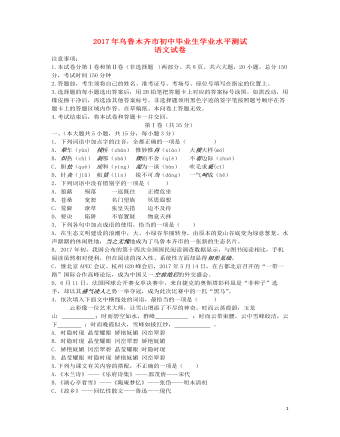
新疆乌鲁木齐市2017年中考语文真题试题(含答案)
直到今天,我依旧最喜欢一个姓,高;最喜欢一个字,翔;超喜欢一个词儿,高翔。抬头,天蓝云白,鸟儿高翔,再没有比这更美的意境了。回眸,凝视,三十年前清晰如昨。记得是个午自习,我们刚升入初三的第二周。正在做作业,突然听见几声响亮的击掌,用脚趾头想想都知道是老班。
人教版新课标小学数学一年级上册认识物体和图形教案
1.让学生拿出长方体摸一摸,问:你有什么感觉?摸的的面是什么形状?师:谁来摸一摸,老师手上长方体的长方形在哪?(学生找出长方形)2.让学生在自己的学具(长方体、正方体、圆柱体)上找图形,并和小组里的同学说一说。3、指名说,教师把学生找到的图形从立体图形上分离出来,贴于黑板上,师:这些图形是物体上的一个面,这就是我们今天要认识的图形。(板书课题——认识平面图形)4.让学生说说:从什么物体上找到了什么图形?5.师:你能想办法把这些形状画到一张纸上吗?请学生演示各自不同的方法,然后教师在黑板上沿长方体的一个面画出长方形。师:你会画吗?请小朋友们用自己喜欢的办法画出并剪出长方形、正方形、圆和三角形各2个。
人教版新课标小学数学二年级下册万以内的加法和减法(一)教案2篇
3.小结。引导学生归纳两位数加减法的口算步骤:要把加上或减去的两位数看成一个整十数和一个一位数,先算两位数加、减整十数,再算两位数加减一位数。三、巩固练习课本第93页的做一做。分别指名口算,并说说怎么想的。四、全课总结1.根据学生回答,教师归纳小结并出示课题:口算两位数加、减两位数。2.口算两位数加、减两位数应注意什么?五、布置作业教后反思《标准》提倡算法多样化,目的是提倡学生个性化的学习。本单元仍然注意体现这一理念,如本课时教学口算两位数加、减两位数时,既呈现了口算方法,还出现了在脑中想竖式的方法;在教学笔算时,还出现口算的方法。其目的就是鼓励学生展开思路,在交流、比较的基础上不断地完善自己的想法,学习计算方法。
人教版新课标小学数学三年级上册可能性教案2篇
D、师:通过刚才摸球,你认为我们能摸到黄球吗?(能)一定能摸到黄球吗?(不一定)也就是说我们摸到的可能是黄球,也可能是白球。(板书:可能)3、超级竞猜:出示挂图,学生抢答。(课本105页例1)三、拓展应用1、师:在我们生活中同样有很多事情都可以用这些表示可能性的词语来表述。2、完成例2。(1)出示挂图,小组讨论。(2)组织学生汇报交流、评价,你想说哪一幅图的内容就说哪一幅。3、你还能用这些词来说说生活里的事吗?先和同桌交流,然后组织汇报、评价。4、游戏:在三叠卡片中各选一张,按排列顺序组成一句话,说一说这件事发生的可能性。5、作业:在书上完成108页第1、2题。四、总结全课1、师:今天,我们主要学习了什么内容?2、小结:生活里可能性的事情还有很多很多,有些事情一定会发生,有些事情可能会发生,有些事情不可能会发生。希望同学们做生活中的有心人,找一找生活中的可能性。
人教版新课标小学数学五年级下册图形的变换教案2篇
师:从图1到图2,风车发生了怎样的变化呢?下面请同学们小组合作,共同来解决报告单上提出的问题。(1)从图1到图2,风车绕点O逆时针旋转了___度。(2)你是怎样判断风车旋转的角度的?生小组讨论。3.小组汇报(实物投影展示)(1)图1到图2,风车绕点O逆时针旋转了90°;(2)组1,根据三角形变换的位置判断风车旋转的角度;(3)组2,根据对应的线段判断风车旋转的角度;(4)组3,根据对应的点判断风车旋转的角度。4.小结(教师边做小结边演示)师:通过观察,我们发现风车旋转后,不仅是每个三角形都绕点O逆时针旋转了90°(闪烁),而且,每条线段(闪烁),每个顶点(闪烁),都绕点O逆时针旋转了90°。5.揭示旋转的特征和性质
人教版新课标小学数学五年级下册分数的加法和减法教案
二、 教学目标1.理解分数加减法的算理,掌握分数加减法的计算方法,并能正确地计算出结果。2.理解整数加法的运算定律对分数加法仍然适用,并会运用这些运算定律进行一些分数加法的简便运算,进一步提高简算能力。 3.体会分数加减运算在生活、生产中的广泛应用。三、学情分析五年级的学生已有一定的生活经验,对数学的神秘感有了更强的好奇心。因此,结合分数加减的学习内容适当补充一些数学史料,可使学生的好奇转化为探究欲,促其学习数学兴趣的提高,并逐步形成良好的探究习惯。因此,教学时,应重视教材提供的两个涉及数学文化的阅读材料的学习。在此基础上,再补充一些相关的学习材料。四、教学重点、难点重点:分数加减法的计算方法难点:引导学生体会理解不同算法的思路。
人教版新课标小学数学一年级上册1~5的认识和加减法教案
教学难点:利用数的分解组成,正确地计算5以内的减法。教学准备:小圆片、小棒、小黑板。教学过程:一、复习:1、拍手接力游戏 。2、看图说图意,并列式计算。3、复习5以内数的组成。二、新授:1、(小黑板)出示画图:树上有5只鸟,飞走了一只。根据这幅图,你能提什么问题呢?2、那么你怎么列式呢?先和小组里的小朋友说一说,再指名回答,请学生上来板书列式。3、小组内交流:“5-1”得几?你是怎么算的?和组里的小朋友交流,每个小朋友都说自己的想法,是怎样得出结果的。4、汇报情况:指名小老师上来教大家计算的过程(提倡算法多样化,教师可以有意识请想法不同的学生上来说一说)5、抽象出计算过程:引导学生如果不看图,不数手指,你会计算“5-1”得几吗?(引导学生用数的组成知识来计算)
人教版新课标小学数学一年级上册6~10的认识和加减法教案
四、全课总结[设计意图:通过电教媒体把抽象的数学知识与学生的心理和生活中喜欢做游戏的特点结合起来,使学生在乐中学,在玩中学,有利于学生对知识的理解和掌握。]教学反思:根据学生年龄小、活泼好动的特点,我在教学中力求激发学生学习的积极性、主动性,使学生在愉悦和谐的课堂气氛中获取新知,并培养了学生的多种能力。第十五课时: 生活中的数教学内容:教科书第46页、第57页、第87页“生活中的数”。教材分析:本节课教师通过课件演示,创设生活情境,在现实世界中寻找生活素材,成功地将学生的视野拓宽到他们熟悉的生活空间。然后通过说一说、摆一摆、猜一猜、算一算等实践活动,让学生感觉到数学就在他们身边,看得见、摸得着。学生自始至终地参与观察、操作、猜测、验证、思考等多种实践活动,积极性非常高。可以说,我在围绕“数与生活”这一中心设计教学活动时,也在积极地进行构建“生活数学”教学体系的探索与尝试。