-
收藏模板
- 模板信息
- 更新时间:2023-09-24
- 字数:约18075字
- 页数:约8页
- 格式:.rar
- 推荐版本:Office2016及以上版本
- 售价:5 金币
您可能喜欢的文档
新人教版高中英语选修1Unit 2 Looking into the Future教案
【设计意图】以“新科技是一把双刃剑”为主题开展讨论活动。这个话题比较大,所以给了一定的限制,首先需要以智能家居为例来阐述科技发展对未来生活产生的影响,然后列举其优点和缺点,最后就以上现象发表自己的观点。这个活动是对整个文本的创意性总结与意义的升华,留给学生一定的想象空间,学生借此机会可以运用文本内容和语言表达自己对科技发展的看法和态度。Assignments:1. Finish Exercise 4 on Page 15 of the textbook.A smart home is one that integrated computers into the structure of the building itself. In this way, many of the things that we now do ourselves become automatic. For example, the smart home could control the air conditioning and lights so that you would no longer have to turn switches on and off, and so that your home would be more energy-efficient. The smart home could also monitor itself to make sure that everything is working as it should, and send you warnings if there is a problem. Such smart homes could even be programmed to detect your health problems, and then give you reasonable advice as to the food you should eat or if you should see a doctor. So, in a sense, smart homes will lead us to living smarter lives.2.Create a smart function for your home, and share your creation in the next period.
新人教版高中英语选修3Unit 2 Healthy Lifestyle教案
Activity 4: Figuring out the structure and the writing purpose 本活动为实现课时目标2。 1.Read Paragraph 6 and think about its main idea and the writer’s writing purpose. Q1: If you were the author, how would you end your article? “For young people, there is plenty of time to change bad habits. However, there is no “magic pill” or delete button that will help you; you have to think about your bad habits and decide on some changes. You have the power to build a happy and healthy life full of good habits!” Q2: What is Paragraph 6 mainly about? (Possible answer: to appeal to young people including teenagers to change bad habits and live a happy and healthy life.) 2.Think about the writer’s writing purpose and share opinions. Q1: What is the writing purpose? Work in pairs and figure it out. (Possible answer: On the one hand, the passage is written to help teenagers change their bad habits and live a healthy lifestyle. On the other hand, it provides us with a scientific way to identify and analyse our problems objectively, thus strengthening our resolve to tackle the seemingly common yet tough problems in our lives.) 【设计意图】 步骤1旨在预测和验证文章最后一段主要内容,梳理完整的语篇结构,步骤2旨在思考和讨论作者的写作目的。教师也可根据学生课堂反应情况融入对语篇人称多次转换的思考。
新人教版高中英语选修4Unit 4 Sharing教案
【核心素养提升点】学会将抽象信息进行可视化表达,提高信息处理能力和分析、推理等高阶思维品质;在跨文化交际中学会以国际视野接受和包容不同的文化。 5.Read Paragraph 2, draw a mind map and answer the questions. Q1:What did Jo learn about Tombe’s life? Q2:What kind of life do the natives lead? Read paragraph 2-5 and draw a mind-map. (Focus on accommodation, possession, diet and belief) 【设计意图】引导学生利用思维导图和问题链等形式来厘清当地人的生活方式,更好地处理和归纳信息 【核心素养提升点】提高信息处理能力、分析和归纳能力,包容异国文化、扩展国际视野。 6.Read Paragraph 3 and answer the questions. Q1:What was Jo’s feeling upon arriving her own home? Q2:Why would she feel that way? Q3:Do you think “It was such a privilege to have spent a day with Tombe’s family”? 【设计意图】通过提问,让学生理解Jo的苦并快乐的心情,并通过对“It was such a privilege to have spent a day with Tombe’s family”这句话的理解,体验志愿者生活的伟大。 【核心素养提升点】学会对信息的综合和归纳,从而理解作者所表达的观点。 Activity4: Summarize the change of Jo's feelings
新人教版高中英语选修1Unit 4 Body Language教案
本阅读材料的话题是交际中的肢体语言,作者从三个方面讲述了肢体语言的特征与作用,通过主题句和举例阐述的方式让读者了解不同文化中肢体语言的相同或者不同的意义,并从更抽象、概括的维度深入认识肢体语言的特点,理解肢体语言的作用。基于肢体语言的特点,作者提醒读者在与人交流中,尤其是当文化背景有差异的时候,要使用得体的肢体语言,尊重、理解和包容不同的文化,进行有效、有素养的沟通。文本共由六个段落组成,篇章结构为“总—分”。第一段用简练的语言引出了话题,并且从我们自身表达的需要和了解他人感受两个角度讲述了肢体语言的作用。第二段阐述了肢体语言的第一个重要特点——肢体语言在不同的文化中有不同的内涵——这也是文中写作篇幅最大的一个要点,最为重要。通过讲述肢体语言的这一特点,作者向读者传递了要尊重不同的文化、要使用与所在文化相宜的肢体语言。
新人教版高中英语选修4Unit 5 Language Your Career教案
本单元阅读文本向中学生推荐职业能力测试(Career Aptitude Test),旨在建议学生利用职业倾向测试来发现自己更感兴趣、更有潜力的学习或职业方向,并规划自己的未来职业。 本文采用了建议性文本,全篇从职业生涯的重要意义讲起,针对中学生对职业规划比较迷茫的现状,提出了职业倾向测试这一建议。全文共七段,其中第一段和第二段为第一部分,其余五段为第二部分。第一部分论述职业的重要性和职业生涯规划的最佳时间是在校期间,第二部分提出解决职业选择困惑可以通过完成职业能力测试,介绍了不同种类的职业倾向测试,结合图表详细说明其中一种操作步骤,并提醒职业建议也基于学历和经验,最后一段概括论述,建议学生通过职业能力测试这一有效的工具,找到自己真正热爱的事物。 在文本教学设计时,要帮助学生梳理有关职业的话题语言。阅读策略层面,指导学生通过学习图表和图形,在有限的空间内获取广泛信息,如阅读图表标题,图表上的标签,X轴Y轴上的数据所指。
- 查看更多相关Word文档
Unit 2 Iconic Attractions教案
Reading and Thinking:A Travel Blog
文本简析
本单元阅读文本是一则旅游博客,记载了作者前往澳大利亚旅游之前的准备、旅游期间的些许见闻以及行将离开之际的反思。作者攻读社会科学的学术背景使他更多地关注了生活在那片土地上的人民以及他们的文化、食物以及生活方式。文本中对澳洲复杂的民族与文化融合及澳大利亚人民的坦率、无拘无束的生活态度的叙述给读者们留下了深刻的印象,让人产生一种有朝一日也去澳洲一探究竟的向往。
全文按时间顺序分为4则条目。条目一记录了作者为旅游所做的一些准备工作;在条目二中作者记叙了其对澳州的各种来自全球不同地区美食的体验;条目三记叙了作者和朋友为了解澳洲土著居民的生活与风俗而探访北领地凯瑟琳镇的经过。其中,作者以详细的笔墨记载了所观察到的一种土著居民独特的乐器—迪吉里杜管的演奏技巧;在条目四中,作者反思了几天中的所见所闻:不同文化的复杂融合以及这种独特文化所熏陶、孕育的热情、友好的澳洲人民。他们给作者留下了深刻的印象。文本以澳大利亚推出的旅游宣传广告语“There’s is nothing like Australia.”结束,感叹不虚此次澳大利亚之行。
在进行文本教学设计时,可以引导学生理清本文的写作主线:作者计划以亲身体验的方式去了解、感受澳大利亚的人民与文化这两方面的情况,在经历中观察、感悟、思考与学习。这种目的明确,准备充分,最后也收获满满的旅游方式也能够对学生提供一定的启发与帮助。在对澳大利亚文化多元性有了更多了解的同时,可以帮助学生关注、积累撰写旅游日志类文本中常见的语言材料。
教学设计(共2课时)
第1课时
一、教学内容
初步理解全文,了解作者在旅游之前所做的各种准备工作,对于澳洲各种美食的初步印象,对澳大利亚土著居民生活状态的了解以及对澳洲多元文化和多民族融合的美好印象。
二、课时目标
1. 通过对有关“澳大利亚”这个话题的讨论,激活背景知识,酝酿阅读兴趣。通过扫读确定小标题,了解文本整体的大意与框架,寻找文章写作主线:Experience & Learn,以及博客的主要的内容:People & Culture,厘清文章主要脉络。
2. 学习note-taking技巧并通过应用这种技巧来更好地梳理、理解并记忆文本内容。
3. 在讨论中澄清文本中理解的难点,增强通过上下文理解词汇意义的能力。
三、教学过程
Activity 1: Discussion
本活动旨在落实课时目标1。
Discuss with the students the following questions.
Q1: What is the first thing you think of when youthink about Australia?
Q2: What is your impression of Australia based onyour experiences or what you have seen in the media?
(the Sydney Opera House, the Great Ocean Road, bushfires, cute koalas and kangaroos...)
The Sydney Opera house is so impressive that it seemsto be a symbol of Australia. We can say it’s an iconic site of Australia. Can youname some other iconic sites around the world?
Koalas and kangaroos are very cute animals. They areiconic animals in Australia.
T: Here is a travel blog with four entries and twopictures written by a blogger who has travelled to Australia. Can you predict whathe mainly wrote about in the blog?
【设计意图】此活动意在引导学生反思旅游的价值,回顾旅游中常见的活动,为进一步学习文本做好铺垫。通过对澳大利亚的讨论,激活相关背景知识,通过对悉尼歌剧院与考拉等澳洲著名亮点的讨论,学习并应用iconic,koala等词汇。引入文本并做简单介绍,预测文本内容。
Activity 2: Scanning and matching the subheadings
本活动旨在落实课时目标2。
1. The students read the first entry and check theirprediction.
He wrote about his experiences and what he learntabout Australian people & their culture, food and way of life.
2. Find a proper subheading for Entry 1 and go onto find subheadings for the other 3 entries. Get the students to tell how they manageto match them quickly.
Deal with two new words in the subheadings: foundationand political, using lexical knowledge.
Divide the 4 entries in 3 stages:
Before traveling: Entry 1; While traveling: Entries2 & 3; Post-traveling: Entry 4
【设计意图】扫读第一则日志,找到作者在旅游中的关注点:People & Culture,确定其小标题,并扫读其余三则日志,寻找合适的小标题。通过小标题的解读,理清文章的主要脉络。利用构词法的知识学习foundation与political两个单词。
Activity 3: Detailed reading for Entry 1: Preparingto travel
本活动旨在落实课时目标3。
Read Part 1 and answer the following questions:
Qs: When was the writer traveling to Australia?
What preparation work did the writer do before travelling?
What did he learn about Australia?
What would he be interested in doing during the trip?
Collect the answering sentences for further use.
Special difficulty:
Located to the south of the equator, it’s often informallyreferred to as “down under”.
Use pictures to explain the word “equator” and explainthe meaning of past participle structure “Located to the south ...”: As it is locatedto the south ...
【设计意图】通过详细阅读第一则日志,提取文本中主要事实信息。解决其中语言理解上的难点,同时为下一个教学活动打好基础。对于出现的单元语法项目过去分词结构只作理解性障碍的清除,不做过多的解释。对文章中其他过去分词结构都同样的处理,意在增加学生的感知量,在单元语法部分再做启发与拓展。
Activity 4: Note-taking skills
本活动旨在落实课时目标3。
Suggest some skills of note-taking, which helps usbetter remember and understand what we have learnt.
1.Use the title to predict the main idea.
2.Write down the important facts, using key words.
While taking notes, write down the important factsusing only the key words, which are informative and serve the title, ignoring thesmall words, such as articles, pronouns, and prepositions.
e.g. The next week he was traveling to Australia.
He planned to keep the blog to record his experiencesand what he learnt.
3. Keep the notes short.
To save time and space, use abbreviation and symbols.The important thing is to be creative and to make sure that you are able to recognizethem when you refer to them later on.
For example:
“Nt Wk” for “next week”; “Aus” for “Australia”;
“∴” for “so”; “&” for “and”; “∧” for “but”
“interestd2” for “more interested”
4. Organize the notes well.
Good notes should have a clear organizational pattern.The ideas should relate to one another and be arranged into an appropriate forme.g. a list, a table, classification charts, mind maps, etc.
Activity 5: Note-taking practice
本活动旨在落实课时目标3。
Divide the students into 3 groups. Each group is totake notes of one entry and present the main facts to the class afterwards. Remindthem to find important facts based on the theme of the blog.
1). Who did the writer meet and what did the writerexperience?
2). What did he learn about the people and the culture,food and way of life?
【设计意图】在学习了note-taking技巧以后,布置学生利用其余的日志应用、操练这项技巧,基于文章主线提炼主要事实的过程中梳理信息,加深对文本的理解。同时训练学生通过上下文、构词法等技巧猜测词义的能力以及逻辑思维能力。
Activity 6: Presentation and further discussions.
本活动旨在落实课时目标3。
Get the groups to present the main facts of each entryaccording to the notes they have taken. After their presentation, raise furtherquestions to clarify difficulties that have been missed out. If the students havea good command of English, give them the chance to raise questions. If not, theteacher may have to act the part.
Entry 2: First impressions
Qs: 1). What were the first impressions about Australia?How did it come about?
(about food. first open-air barbecue, different butyummy meals)
2). Why did the blogger use “!” when sharing the firstimpressions?
(unexpected, amused,…)
3). What did the blogger learn about Australian food?How does it come about?
Of different origins:
a lot of typical Australian food: British
premier food experiences: from around the world
bean curd and Asian herbs, dim sim: Asian
Australia is an immigrant country and its food hasbeen brought to the country by settlers at different times, first the Westerners,especially the British and later immigrants around the world, especially the neighboringAsian countries.
Grasp chances to discuss the meaning of bakeries,fast-food joints, butcher shops, premier food experiences, herbs and Chinese-inspireddim sim, using lexical knowledge, pictures, context clues or clear English explanation.
Entry 3: Aborigines and didgeridoos
Qs: 1. Why do you think the area is called the NorthernTerritory?
Located in the north of the country, the area is formallyreferred to as Northern Territory.
2. Why are the native people called the Aborigines?
(the Latin word ab: from; origins: the beginning.the word means being there from the beginning or the earliest ever known.)
3. How do you understand the sentence “The Aboriginalpopulation may be small, its influence is still visible”?
(the Aborigines actually only have a small influencein the society.)
Supplement knowledge: Before the arrival of the westerners,the Aborigines were the owner of the land. But after their arrival, the Aboriginesbegan to lose their land. Many of them were killed in the conflicts and many diedof the diseases brought by westerners. They were forced to leave the rich landsand lived in remote and poor areas. To our relief, the Aborigines are now protectedby the law and treated as equal citizens.
4. What is the main theme reflected in Aboriginalmusic and why?
The celebration (which means “praise”) of the naturalworld and the spiritual world around them.
They lived a hard life, which is shown in words likesurvive, had to, just sticks found on the ground, and had to be in close contactwith nature, which means they were largely at the mercy of nature.
5.Why does he describe the process of playing thedidgeridoo so carefully?
On the one hand, he may be very interested in themusical instrument. On the other hand, by describing the difficulty of playing theinstrument, he shows respect to the wisdom of the Aborigines.
Clarify the meaning of the special difficulties: hollow,vibrate, horn, pitch.
Entry 4: Reflections on multiculturalism
1. What did the writer think of his trip to Australia?
(Wonderful, enjoyable)
2.What is his biggest impression of Australia?
(the complicated mix of peoples and cultures thatmake up the nation, that is multiculturalism.)
3.What happened in 1788?
In 1788, Australia was formally established by theBritish as a colony.
4.What does the writer think of the Australia people?
He likes them a lot for their straightforward andfree-and-easy attitude towards life and their friendliness and warmth.
If time permits, raise more detailed questions. Ifnot, guarantee enough time for the
students to go through their notes.
In the presentations and discussions, the teacherserves as an assistant and facilitator, offering help with the difficulties andguidance for discussions and bridging the process of the discussion.
5.How do you understand the tourism slogan?
Unique culture and unique people.
【设计意图】为学生提供一个舞台来展示他们对文本的理解,帮助他们在应用语言材料的过程中习得语言,同时培养语言表达能力。在把话语权还给学生的同时,教师还可在聆听、交流的过程中帮助学生理清逻辑,对他们所摘录的笔记及时反馈,提高他们的Note-taking技能。此外,教师应对每个语段中学生可能存在的理解上的难点了然于胸,通过穿插式、主动引导等方式帮助学生解决理解上的困难,掌握、巩固文本中的语言知识。对于语言知识的关注的点与量以不打断学生持续的表达以及师生之间、生生之间有意义的交流为原则。根据学生英语基础,教师可灵活调整讨论的广度、深度及密度。
Activity 7: Assignment
本活动旨在落实课时目标2、3。
1.Improve the notes they have taken of the entry andgo on to take the notes of the other two entries.
2.Think about the identity of the blogger: Who keptthe blog?Find facts to support yourassumption.
【设计意图】通过进一步完善已摘录的笔记,并为其他两则日志摘录笔记,进一步训练笔记摘录能力,同时对全文的内容有更好的理解,在应用中学习、掌握语言。同时,学生为了尽可能多地推断作者的身份,他们会对博客全文进行更细致的阅读,训练学生阅读时的推断能力。
第2课时
一、教学内容
在已经理解文本表层意义的基础上,通过更深入的讨论,补充相关背景知识,帮助学生对澳大利亚多元文化的形成有更深的理解。观察全文写作特点,梳理相关语言,仿写旅游日志。
二、课时目标
1. 学生分享他们对作者的身份的推测,在交流中印证自己阅读中的推断并训练语言表达能力。讨论“旅游”这个话题,回顾作者旅游的组织方式,批判性地评价作者的旅游方式;
2. 学生复习作者在旅途中的经历与学习所得,在讨论中更深入地思考、澄清文章理解中的重点、难点。获得相关的背景知识,对于澳大利亚多元文化的形成有更深入的了解,思考文化多元的价值,培养学生的文化意识。
3. 学生在对文本内容的讨论中联系实际生活,同时积累有关旅游这个话题的语言素材,尝试进行仿写活动,巩固所学内容,提升语言能力。
三、教学过程
Activity 1: Discussing, comparing and critical thinking
本活动为实现课时教学目标1。
Start a discussion about the identity of the bloggerand ways of travel.
Qs: 1. Who wrote the travel blog? Lets share ourassumptions about the blogger’s identity and give supporting facts.
The writer may well be a Chinese university student.
He went on thetrip during the school holiday;
He majors in socialstudies.
The National Dayholiday of China usually lasts from Oct. 1 to Oct 7.
Of the great numberof food experiences in Australia, the writer particularly mentions the Chinese-inspireddim sim;
...
The writer might also be an exchange student in aChinese university:
 The blog was writtenin English. If the writer were Chinese, why bother to write it in English?
...
Other assumptions are welcome.
2. Do you like traveling? Why? What do you often doduring the travel?
3. Now that we have read the blog, what do you thinkof the writer’s travel? Why?
(In the discussion, the teacher may demonstrate theskill of note-taking and organize their ideas in a certain pattern artistically.)
The writer’s travel is quite fruitful thanks to thefollowing elements.
(for convenience, we use “He” in the discussion.)
Target -- He had clear travel targets: meeting thepeople and experiencing the culture.
Research -- Before setting out, he did some researchon his destination.
Abandonment -- With so much to admire but only a limitedtime, he even abandoned the opportunity to visit some iconic attractions or cuteanimals so as to focus on his targets.
Venturing -- During the travel, he would venture totry new and unusual things.
Experiencing -- Instead of sweeping past hot touristspots, he chose to experience new customs and cultures on his own.
Learning--- He set out to learn and finally he didlearn much from the trip.
This way of traveling may not be the best, but iscertainly useful for reference. It may inspire us to make our future travel experiencesmore fruitful.
【设计意图】通过对作者身份的讨论,训练学生阅读中的推断能力,建立文本阅读中的作者意识。谈论学生们自己的旅游经历---或是走马观花式的,或是个性化、文化偏好式的,比较本文博主的旅游方式并形成评价,培养学生的批判性思维能力。在讨论的过程中教师有意识地对信息进行提取、编码、组织,让学生再次感知note-taking的技能,同时使用提炼的6个单词的首字母构成TRAVEL这个单词,创造教学过程中的艺术美感,加深学生对有效旅游的印象。帮助学生通过讨论与对主题的提升,反思自己的旅游方式,以便做出更优化的安排,在今后的旅程中有更多的收益。
Activity 2: Further discussion of the 6 elements aboveand supplement of more background knowledge
本活动为实现课时教学目标2。
1.Target
Q: The writer’s clear target of traveling, meetingthe people and experiencing the culture, is closely related to his major in socialstudies. Then what is social studies?
Social studies is a part of a school or college curriculumconcerned with the study of social relationships and the functioning of societyand usually made up of courses in history, government, economics, civics, sociology,geography, and anthropology. (Dictionary byMerriam-Webster)
Reflection: When you go out to travel, what targetsdo you usually have in mind?
2.Research
Q: Suppose you are traveling to Hangzhou during theschool holidays, how will you do research on the city?
(surf the internet, read books or travel brochures,consult friends, ...)
What information will you be interested to know?
(location, iconic sites, local cuisines, interestingcustoms, shopping malls ...)
3.Abandonment
转载请注明出处!本文地址:
https://www.lfppt.com/worddetails_58483817.html最新课件教案文档
-
精选高中生期末评语
1、该生学习态度端正 ,能够积极配合老师 ,善于调动课堂气氛。 能够积极完成老师布置的任务。学习劲头足,听课又专注 ,做事更认 真 ,你是同学们学习的榜样。但是,成绩只代表昨天,并不能说明你 明天就一定也很优秀。所以,每个人都应该把成绩当作自己腾飞的起 点。2、 你不爱说话 ,但勤奋好学,诚实可爱;你做事踏实、认真、为 人忠厚 ,是一个品行端正、有上进心、有良好的道德修养的好学生。在学习上,积极、主动,能按时完成老师布置的作业,经过努力 ,各 科成绩都有明显进步,你有较强的思维能力和学习领悟力,学习也有 计划性,但在老师看来,你的潜力还没有完全发挥出来,学习上还要有持久的恒心和顽强的毅力。
公司2024第一季度意识形态工作联席会议总结
一是要把好正确导向。严格落实主体责任,逐条逐项细化任务,层层传导压力。要抓实思想引领,把理论学习贯穿始终,全身心投入主题教育当中;把理论学习、调查研究、推动发展、检视整改等有机融合、一体推进;坚持学思用贯通、知信行统一,努力在以学铸魂、以学增智、以学正风、以学促干方面取得实实在在的成效。更加深刻领会到******主义思想的科学体系、核心要义、实践要求,进一步坚定了理想信念,锤炼了政治品格,增强了工作本领,要自觉运用的创新理论研究新情况、解决新问题,为西北矿业高质量发展作出贡献。二是要加强应急处事能力。认真组织开展好各类理论宣讲和文化活动,发挥好基层ys*t阵地作用,加强分析预警和应对处置能力,提高发现力、研判力、处置力,起到稳定和引导作用。要坚决唱响主旋律,为“打造陕甘片区高质量发展标杆矿井”、建设“七个一流”能源集团和“精优智特”新淄矿营造良好的舆论氛围。三是加强舆情的搜集及应对。加强职工群众热点问题的舆论引导,做好舆情的收集、分析和研判,把握时、度、效,重视网上和网下舆情应对。
关于2024年上半年工作总结和下半年工作计划
二是深耕意识形态。加强意识形态、网络舆论阵地建设和管理,把握重大时间节点,科学分析研判意识形态领域情况,旗帜鲜明反对和抵制各种错误观点,有效防范处置风险隐患。积极响应和高效落实上级党委的决策部署,确保执行不偏向、不变通、不走样。(二)全面深化党的组织建设,锻造坚强有力的基层党组织。一是提高基层党组织建设力量。压实党建责任,从政治高度检视分析党建工作短板弱项,有针对性提出改进工作的思路和办法。持续优化党建考核评价体系。二是纵深推进基层党建,打造坚强战斗堡垒。创新实施党建工作模式,继续打造党建品牌,抓实“五强五化”党组织创建,广泛开展党员教育学习活动,以实际行动推动党建工作和经营发展目标同向、部署同步、工作同力。三是加强高素质专业化党员队伍管理。配齐配强支部党务工作者,把党务工作岗位作为培养锻炼干部的重要平台。
XX区民政局党支部开展主题教育工作情况总结报告
二要专注于解决问题。根据市委促进经济转型的总要求,聚焦“四个经济”和“双中心”的建设,深入了解基层科技工作、学术交流、组织建设等方面的实际情况,全面了解群众的真实需求,解决相关问题,并针对科技工作中存在的问题,采取实际措施,推动问题的实际解决。三要专注于急难愁盼问题。优化“民声热线”,推动解决一系列基层民生问题,努力将“民声热线”打造成主题教育的关键工具和展示平台。目前,“民声热线”已回应了群众的8个政策问题,并成功解决其中7个问题,真正使人民群众感受到了实质性的变化和效果。接下来,我局将继续深入学习主题教育的精神,借鉴其他单位的优秀经验和方法,以更高的要求、更严格的纪律、更实际的措施和更好的成果,不断深化主题教育的实施,展现新的风貌和活力。
交通运输局在巡回指导组主题教育阶段性工作总结推进会上的汇报发言
今年3月,市政府出台《关于加快打造更具特色的“水运XX”的意见》,提出到2025年,“苏南运河全线达到准二级,实现2000吨级舶全天候畅行”。作为“水运XX”建设首战,谏壁闸一线闸扩容工程开工在即,但项目开工前还有许多实际问题亟需解决。结合“到一线去”专项行动,我们深入到谏壁闸一线,详细了解工程前期进展,实地察看谏壁闸周边环境和舶通航情况,不断完善施工设计方案。牢牢把握高质量发展这个首要任务,在学思践悟中开创建功之业,坚定扛起“走在前、挑大梁、多做贡献”的交通责任,奋力推动交通运输高质量发展持续走在前列。以学促干建新功,关键在推动高质量发展持续走在前列。新时代中国特色社会主义思想着重强调立足新发展阶段、贯彻新发展理念、构建新发展格局,推动高质量发展,提出了新发展阶段我国经济高质量发展要坚持的主线、重大战略目标、工作总基调和方法论等,深刻体现了这一思想的重要实践价值。
XX区文旅体局2023年工作总结 及2024年工作安排
三、2024年工作计划一是完善基层公共文化服务管理标准化模式,持续在公共文化服务精准化上探索创新,围绕群众需求,不断调整公共文化服务内容和形式,提升群众满意度。推进乡镇(街道)“114861”工程和农村文化“121616”工程,加大已开展活动的上传力度,确保年度目标任务按时保质保量完成。服务“双减”政策,持续做好校外培训机构审批工作,结合我区工作实际和文旅资源优势,进一步丰富我市义务教育阶段学生“双减”后的课外文化生活,推动“双减”政策走深走实。二是结合文旅产业融合发展示范区,全力推进全域旅游示范区创建,严格按照《国家全域旅游示范区验收标准》要求,极推动旅游产品全域布局、旅游要素全域配置、旅游设施全域优化、旅游产业全域覆盖。
今日更新Word
-
备战开学季新学期开学小报手抄报word模板
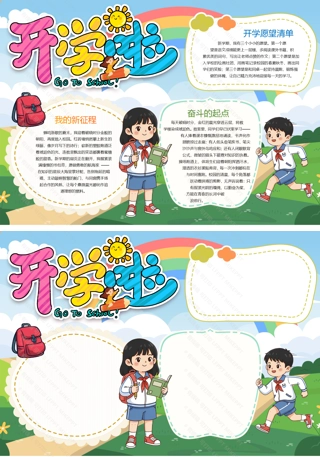
这套 “开学啦” 主题手抄报套装包含彩色填色版、空白编辑版与黑白线稿版,是专为学生打造的开学主题创作模板。它以清新明快的校园插画为底色,搭配彩虹、太阳等充满活力的元素,整体风格活泼可爱。彩色版已为你提供完整范例,包含三个核心板块:“我的新征程”:以优美的文字抒发告别假期、重返校园的期待,表达了在知识海洋里遨游、与同窗携手奋进的愿景。“奋斗的起点”:描绘了晨光里教室的读书声、操场上挥洒的汗水,传递出以勤奋为舟、在青春长河里破浪前行的积极态度。“开学愿望清单”:用具体的小目标,如提升语文成绩、加入校园社团、和同伴坚持晨跑,展现了新学期的成长规划。空白版和线稿版则为学生预留了充足的创作空间,你可以自由填充文字、图案,既能直接借鉴彩色版的文案,也能写下属于自己的新学期期许。无论是用于课堂作业、班级展示,还是作为开学季的自我激励,这套手抄报都能帮你用生动的方式开启新学年。
新年新愿望手抄报
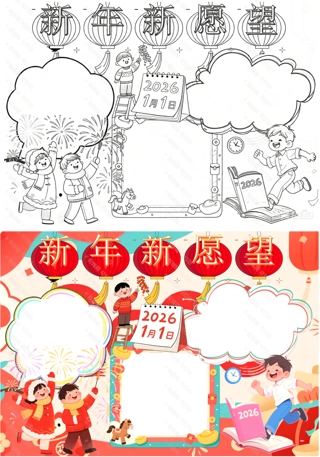
这是一幅充满年味的 “新年新愿望” 主题手抄报,以 2026 年 1 月 1 日为时间节点,整体风格活泼鲜亮。顶部用红灯笼造型呈现标题,暖红底色搭配金色字体,瞬间拉满新年氛围。画面左侧,裹着厚围巾的孩子举着烟花,笑意盈盈的模样衬得烟火光影格外热闹;中间的日历旁,小男孩踮脚挂起鞭炮,细节里藏着新春的仪式感;右侧男孩踩着印着 “2026” 的书本奔跑,时钟元素又添了几分时光向前的生动感。版面里的空白气泡与边框,刚好留给书写心愿 —— 可以像示例里那样,写下对旧年的回望:“去年学会了骑自行车,交到了新朋友”;也能装进对新年的期待:“成为自律的自己,每天早起不赖床”。色彩上以红、黄为主调,点缀青蓝与暖粉,既贴合春节的喜庆,又带着孩童式的明快,把 “新年新盼头” 的氛围揉进了每一处线条与色彩里。
2026 马年新年手抄报模板 小学生元旦春节英文祝福主题素材
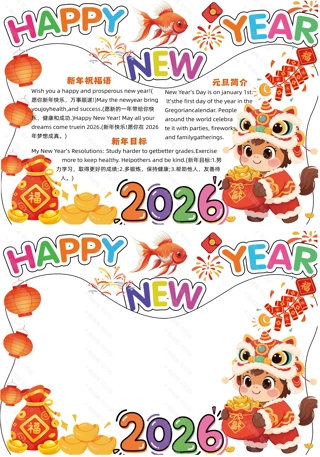
这是一张充满童趣的 2026 马年新年手抄报,整体以红、金为主色调,搭配活泼的彩色字体,瞬间拉满新春氛围。画面里,舞狮装扮的卡通娃娃抱着装满金元宝的福袋,旁边的 “福” 字钱袋、红灯笼、金鱼与烟花元素,把传统年味揉进可爱画风里。内容分为三大板块:“新年祝福语” 用中英双语送上 “新年快乐、万事顺遂” 的祝福;“元旦简介” 科普了公历新年的日期与全球庆祝方式;“新年目标” 则写下 “努力学习、多锻炼、友善待人” 的温暖期许,既贴合节日主题,又藏着满满的生活气息。
精选高中生期末评语
1、该生学习态度端正 ,能够积极配合老师 ,善于调动课堂气氛。 能够积极完成老师布置的任务。学习劲头足,听课又专注 ,做事更认 真 ,你是同学们学习的榜样。但是,成绩只代表昨天,并不能说明你 明天就一定也很优秀。所以,每个人都应该把成绩当作自己腾飞的起 点。2、 你不爱说话 ,但勤奋好学,诚实可爱;你做事踏实、认真、为 人忠厚 ,是一个品行端正、有上进心、有良好的道德修养的好学生。在学习上,积极、主动,能按时完成老师布置的作业,经过努力 ,各 科成绩都有明显进步,你有较强的思维能力和学习领悟力,学习也有 计划性,但在老师看来,你的潜力还没有完全发挥出来,学习上还要有持久的恒心和顽强的毅力。
“四零”承诺服务创建工作总结
(二)坚持问题导向,持续改进工作。要继续在提高工作效率和服务质量上下功夫,积极学习借鉴其他部门及xx关于“四零”承诺服务创建工作的先进经验,同时主动查找并着力解决困扰企业和群众办事创业的难点问题。要进一步探索创新,继续优化工作流程,精简审批程序,缩短办事路径,压缩办理时限,深化政务公开,努力为企业当好“保姆”,为群众提供便利,不断适应新时代人民群众对政务服务的新需求。(三)深化内外宣传,树立良好形象。要深入挖掘并及时总结作风整顿“四零”承诺服务创建工作中形成的典型经验做法,进一步强化内部宣传与工作交流,推动全市创建工作质效整体提升。要面向社会和公众庄严承诺并积极践诺,主动接受监督,同时要依托电台、电视台、报纸及微信、微博等各类媒体大力宣传xx队伍作风整顿“四零”承诺服务创建工作成果,不断扩大社会知情面和群众知晓率。
2024年度工作计划汇编(18篇)
1.市政基础设施项目5项,总建设里程2.13km,投资概算2.28亿元。其中,烔炀大道(涉铁)工程施工单位已进场,项目部基本建成,正在办理临时用地、用电及用水等相关工作;中铁佰和佰乐(巢湖)二期10KV外线工程已签订施工合同;黄麓镇健康路、纬四路新建工程均已完成清单初稿编制,亟需黄麓镇完成图审工作和健康路新建工程的前期证件办理;公安学院配套道路项目在黄麓镇完成围墙建设后即可进场施工。2.公益性建设项目6项,总建筑面积15.62万㎡,投资概算10.41亿元。其中,居巢区职业教育中心新建工程、巢湖市世纪新都小学扩建工程已完成施工、监理招标挂网,2月上旬完成全部招标工作;合肥职业技术学院大维修三期已完成招标工作,近期签订施工合同后组织进场施工;半汤疗养院净化和医用气体工程已完成招标工作;半汤疗养院智能化工程因投诉暂时中止;巢湖市中医院(中西医结合医院)新建工程正在按照既定计划推进,预计4月中下旬挂网招标。