-
人教版高中英语必修3Festivals around the World说课稿3篇
Teaching plan for Unit 1 book3Good morning, teachers. It’s my great pleasure to be here because I can share my lesson with you and I can learn a lot from it. I’ll begin my lesson from the following four parts, the teaching material, the teaching methods, the studying methods and the teaching procedure.Firstly, let me talk about the teaching material. The content of my lesson is the reading passage festivals and celebrations of Unit 1 Festivals around the world. This passage is about festivals and celebrations. By studying this passage, we’ll enable the students to know that festivals exit everywhere, and many of festivals in different countries celebrate similar ideas. As we all know, the reading passage is the center of each unit. If the Ss can learn it well, it will be helpful to make the Ss learn the rest of this unit.After studying the teaching material, I think the teaching aims are as the followings:1. Knowledge aims:(1) The Ss can master the usage of the important words andexpressions.(2)The Ss can use the __________________ (grammar) in the proper situation.Make students know about the festivals all over the world and the detail of the festivals, such as origin, content, and the date of the holiday festivals.2. Ability aims:(1) Students can talk about festivals and celebrations in English(2) To improve the student’s reading ability, especially their skimming and scanning ability.3. Emotion aims:Make the Ss know about the foreign festivals, and respect other countries’ custom.Next, let’s come to the important points and the difficult points.The important point is how to make the Ss understand the text better and the difficult point is how can they talk about it. secondly, Teaching Methods:1. task-based Language Teaching2. Computer assisted language teaching.3. question-and–answer methodThirdly, Studying Methods:
人教版高中英语必修3The million pound bank note说课稿3篇
在接下来的细读环节,我套用了高考对阅读理解的考查方式设置了5个问题,分别为三个推理判断题,一个细节题和一个主旨大意题。学生需要对文章的内容进行分析、归纳、推理、猜测等高级思维活动才能做出正确的回答。【设计意图】这一过程是对学生进行细读的训练,培养学生获取特定信息和挖掘文章深层次信息的能力。第三环节:Intensive-reading (精读) 15′第三个环节精读,既是最重要的环节,也是突破本课重难点的关键。首先,让学生思考剧本中人物看到百万英镑前后的态度发生了怎样的变化。其次,让学生仔细阅读文章,找出可以表现人物态度变化的具体的语言和动作。最后,让学生总结人物的态度发生变化的根本原因是什么,从而引出Money Talks, 供学生思考。【设计意图】通过一系列的活动培养学生学习从人物的语言和动作探究人物的心理,使学生进一步体会戏剧语言的魅力,从而对文章背后所反映的社会问题进行思考,也为下一步的讨论环节做好铺垫。
人教版高中英语必修5First aid说课稿6篇
In this class, I have 3 teaching aims, that is, knowledge aims, ability aims and emotion aims.1) Knowledge-Teach students new words and expressions, such as temporary, bleed,sprain choke, first aid, fall ill and so on.-Enable students to have a better understanding for some basic knowledge of first aid.2) Ability-Train students’ speaking, reading and writing abilities by different teaching activities, such as skimming, comprehending, team work, role play, retelling and writing.-Develop students’ reading strategy on how to move general idea to specific information.3) Emotion-Promote students’ awareness of giving first aid.- Cultivate students’ creativities.Then let’s come to my teaching methods and activities.III. Teaching methods and activities:To achieve different teaching aims, various kinds of teaching methods and activities will be adopted throughout this period, such as TBL (task-based learning), skimming, team work, brainstorm and others, which can offer students opportunities to fulfill tasks in which they can use language to achieve a specific outcome.IV. Teaching aids:Computer and blackboardV. Teaching important points:1) Make students have a clear mind for the structure of the text.2) Help students understand the theme of the text.VI. Teaching difficulties:1) So many new words may affect students’ understanding.2) How to get students to know about the functions of the skin and thecauses, characteristics and treatments for different degree burns,and the knowledge about giving first aid. VII. Blackboard design:
人教版高中英语必修5Making the news说课稿4篇
今天我们来介绍一下必修五第四单元的授课方式。这个单元的题目是Making the news。应该是学生比较感兴趣的话题,学生往往对新闻工作充满好奇,所以我们可以利用这个机会多设计一些师生互动和学生互动,来激发起学习的积极性,提高学习效率。同时我们可以利用这个单元不仅帮助学生掌握语言知识,培养语言能力,同时让其了解新闻工作的重要性,培养起社会智能感。这个单元分为六个课时,它的教学目标是这样的:语言目标是掌握词汇表中的常用单词和短语,掌握倒装句的一些基本用法。 技能目标是能初步掌握约会的基本句型并在真实的场景下正确运用。新闻报道类文章的写作技能。采访的基本规范和沟通技能。情感目标是对新闻报道的客观性和真实性有更好的理解。对新闻记者的职业有更深入的了解,并能体会其工作的重要性。下面我们来介绍一下第一课时的授课方式,第一课的教学目标是这样的第一课时的教学目标语言目标:单词:Occupation, journalist, editor, photographer, curious, personality, enthusiasm
人教版高中英语必修5The United Kingdom说课稿4篇
Teaching Aims:Knowledge 1. Get the students to learn the useful new words and expressions in this section. Aims:2. Let the students learn about how the UK was formed and the four groups of invaders.1. Develop students’ reading ability and let them learn different Ability reading skills. Aims:2. Enable students to learn to talk about the United Kingdom and the Union Jack Emotional 1. Let students know more about the UK2. Develop students’ sense of cooperative learning Aims:Teaching Important Points:1. Let the students learn about the countries of the United Kingdom and the Union Jack2. Get the students to read the passage and know about how the UK was formed and the four groups of invaders.3. Have the students learn different reading skills.Teaching Difficult Ponts:1. Develop students’ reading ability.2. Enable students to talk about the United Kingdom and the Union Jack.3. Let students learn how the UK was formed geographically and historically.Teaching Methods:Showing pictures, asking, exercising, listening, reading etc.Teaching Aids:A computer,a projector and a blackboard.Teaching Procedures: 1) Show a map of the world, ask students the following questions:Where is the UK?What’s the full name of the UK?2) Ask the students work in pairs to do the quiz on Page 9.Do you want to test how many things you know about the United Kingdom? Let’s have a small test.Using the map on P9, students answer the following questions:?How many countries does the UK consist of? What are they??England is divided into three main areas. Do you know what they are? 1) Scanning (10Minutes )Let the students hold the questions asked in pre-reading and read the passagequickly and then let them do the following exercise.Join lines to the right answer.
人教版高中语文必修1《沁园春·长沙》说课稿3篇
4、学习全词:(1)背景介绍,让学生看课文中的年代,然后让学生回忆1925年的毛泽东的情况,老师适当提示,让学生了解其背景。(出示幻灯片)(2)学生自由朗读,结合注释和背景理解诗词。(3)师生共同理解全词①先让学生齐读前三句,思考正确的语序,并用正常的语序解释。②品味第三到第十句,这里是教学的一个重点,要让学生先读,再理解,在此基础上训练学生的想象能力。③分析上阙中的最后三句。④小结上阙。提出了一个问题“谁主沉浮”让学生在文中找内容回答,然后转入下阙内容的分析。⑤分析下阙内容,回答“谁主沉浮”的问题,突出本文主旨5、描绘诗词形象:学生用自己的语言把上阙的内容生动地描绘出来。6、欣赏学生优秀作品。(根据时间具体而定,也可以作为课后作业)
人教版高中语文必修1《论语》说课稿
三、文本中的句子解决完毕,大家对文本内容的理解更加深入了。请速度文本,思考:《论语》具体涉及了哪些方面的内容,体现了孔子什么观点?明确:主要有治学、从政、修身养性和交友治道等方面,体现了孔子“克己复礼”的思想。四、 教师引导学生讨论: 如何评价孔子的言行和观点?从古至今人们对孔子有哪些评价?明确:1、春秋战国时代, 孔子门人及其后学者均推尊孔子。门人中以子贡为代表,他对孔子赞美备至,奉如天人,把孔子比拟为高天、日月、木铎,凡人是永远不可企及的,认为孔子是天生的圣人,“仰之弥高,钻之弥坚”。亚圣孟子认为孔子所行的“圣人之道”是遍及自然界和社会的至高准则。然而当时民间一般看法认为孔子是博学成名的大学者。
人教版高中语文必修1《小狗包弟》说课稿
探究、讨论、交流:1、包弟讨人喜欢,作者却不得不将它送走,为什么?2、送走包弟后,作者为什么先是感觉轻松,随后觉得沉重?3、“您的小狗怎样?”这句话反复出现,有什么用意?4、“整整十三年零五个月过去了”“整整”一词有什么作用?5、“满园的创伤使我的心仿佛又给放在油锅里熬煎”这句话如何理解?6、“我怀念包弟,我想向它表示歉意。”如何理解?学生各抒己见后教师结合材料发表看法明确总结特别是最后一个问题得出作者这发之心底的语言,不仅仅是歉意,更是发自灵魂深处的忏悔!是对生命的尊重,是一个有良知的作家对反省历史的呼号。第三环节“认识你自己”——忏悔意识与我引导学生正视和反省成长过程中曾犯下过错。并布置课后作业:要求学生课后在本周随笔中谈反省忏悔后的感受。
人教版高中语文必修3《林黛玉进贾府》说课稿5篇
【教学目标】我设置的本课的教学目标有三个:1、知识与技能(1)了解曹雪芹及《红楼梦》(2)学习通过一个人物的行踪、所见所闻,介绍典型环境,认识封建贵族阶级豪奢极耻的生活以及森严的等级、礼仪制度(3)分析小说人物出场的描写艺术,培养学生分析小说人物形象的能力。(4)一叶落而知秋”,通过对“林黛玉进贾府”这一故事情节的把握是否能引发对《红楼梦》的认知兴趣,并找到一个突破口,有针对性地进行自主探究,进而进行个性化解读。(5)整体认知小说,认识小说悲剧的必然性和思想价值.2、过程与方法(1)用直观演示和归纳探究法分析文章要点。(2)用讨论探究法体验作者对文中人物的情感态度。3、情感态度价值观(1)正确理解《红楼梦》的思想内涵,培养学生热爱祖国传统文化的思想感情。(2)认识封建大家族的腐朽没落,理解贾宝玉追求个性自由反封建的精神。
人教版高中语文必修3《马嵬(其二)》说课稿
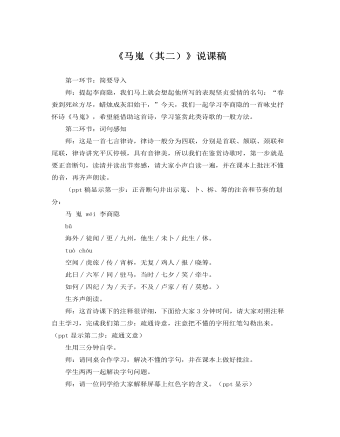
生2:颔联的意思是只听到禁卫军中传来夜间巡逻的梆子声,不再向宫中那样安逸地听到有鸡人打鸣报时的声音了。生3:颈联的意思是说事变发生那天军队发生哗变停留不前,但当年唐玄宗以为自己可以和贵妃天天在一起,对天上的牵牛和织女一年一度的会见还加以嘲笑呢。生4:尾联的含义是为什么唐玄宗当了四十五年的皇帝,还不如普通百姓夫妻恩爱,长相厮守。师:好的。请大家再齐读一遍诗文,做到人人都能疏通诗的含义。学生再次齐读。第三环节:专项探究师:白居易曾说:“文章合为时而著,歌诗合为事而作。”这首诗就是作者途经马嵬驿,咏马嵬之变这一历史事件而作,所以我们鉴赏的第三步,就是通过标题和诗文,弄清诗中的历史事件。请同学们找出诗中哪些诗句描述了这一事件?
人教版高中生物必修1细胞增殖说课稿
f.有丝分裂的意义(讨论分析教学),首先引导学生结合所学知识讨论有丝分裂的的作用,最后有教师归纳总结,并要求学生在理解的基础上记忆。g.无丝分裂(图形直观教学、简介),本部分内容不是教学的重点,内容也相对简单,所以我的教学方法是直接给学生展示挂图,再进行简短介绍,让学生了解即可。h.引出减数分裂的概念,为第五章学习打下基础。小结:新课讲完以后由教师对本节内容进行总结巩固和反馈:进行一些课堂练习达到巩固和反馈的作用。最后布置作业,各种难度的作业题目均设置一些,其中简单题比重大,难题要求学生选作,这样提高学生学习积极性。2教学媒体程序设计: 细胞周期的概念(多媒体课件演示周期动画)植物细胞有丝分裂(多媒体课件演示分裂各期动画)动植物细胞有丝分裂异同点(多媒体课件演示分裂各期动画)有丝分裂过程中DNA和染色体数量的变化规律(挂图演示,包括表格和函数图象)
人教版高中生物必修1细胞分化说课稿
在讲述细胞分化的意义时,也可以用实例来解决,工厂的生产车间里不同的工人干着不同的工作,一件产品的产出需要这些工人才能创造出来,一个生物体就像一个车间一样,不同的细胞各司其职,相互合作。工人的分工是主管调解出来的,而不同细胞的出现就是细胞分化的结果,所以说,细胞的分化是生物体发育的基础。在讲到细胞全能性的时候,要多给学生举些关于细胞全能性的例子,如植物组织培养、克隆技术等等,让学生从实际的例子中真正的悟出细胞全能性的含义。此外,还要重视教材中的疑问,适当对题目进行引申,使它的作用更加突出,有利于学生对知识的串联、积累、加工,从而达到举一反三的效果。怎样来解释细胞的全能性呢?这主要以讲授法来解释了,细胞全能性的体现需要在组织或器官离体后才能体现出来,每个细胞都包含着生物体的全套遗传基因,通过基因选择性的表达,使离体的组织或器官通过分裂和分化逐渐发育成完整的植株。
人教版高中政治必修1税收及其种类说课稿
在学生明确了税收的含义之后,我将分别对税收的三个基本特征进行解析。在讲解了之后,并分别用实例对其进行说明,加深学生对知识点的印象。最重要的是,总结出关键的字眼,使得学生能够清晰的区分出税收的三个基本特征。将强制性概括为依法征税、依法纳税;无偿性概括为不具有偿还性和返还型;固定性概括为规定应不应纳税、纳什么税、纳多少税。并跟学生指出,强制性是基本前提,无偿性是核心。由此根据书上的内容,推导出税收的三个基本特征相互之间的关系,即:三者缺一不可,统一于税法。而且,无偿性要求强制性,强制性保障无偿性;而无偿性与强制性又共同决定固定性。从而结束新课讲授。3、课堂总结根据板书内容重新回顾本课学习的主要内容,包括税收的含义,以及税收的三个基本特征和它们之间的相互关系。4、作业布置让学生预习税收的种类的内容,尤其是增值税和个人所得税。同时了解父母每月所缴纳的个人所得税和怎么计算的。
人教版高中政治必修3聚焦文化竞争力说课稿
(1)文化与经济、政治在经济基础上相互影响。①经济、政治和文化是社会生活的三个基本领域。其中,经济是基础,政治是经济的集中表现,文化是经济和政治的反映。一定的文化由一定的经济、政治所决定,又反作用于一定的政治、经济,给予政治、经济以重大影响。②经济发展是文化发展的基础。但这并不意味着文化的发展始终与经济的发展亦步亦趋。如同不能简单地把精神文明看作是物质文明的派生物和附属品一样,也不能简单地认为文化是经济、政治的派生物和附属品。文化有其自身的传承性和相对的独立性。那种认为只要物质条件好了,精神文化自然而然地就会好起来,物质条件差一点,精神文化就不可能搞好的观点,不符合历史发展的事实,是不正确的。③掀开历史的画卷,文化既有古今和地域之别,又有先进与落后、腐朽之分。不同的文化,对经济、政治的影响不同,对社会发展的作用也不同。不同民族的文化,影响不同民族和国家各具特色的发展道路。
人教版高中政治必修3文化与经济、政治说课稿
(二)讲授新课:1、讲授重点:文化与经济、政治的关系。我首先带领学生分析课本上的活动探究,了解日常生活中的常见活动,让学生们观看视频材料帮助学生对文化活动、经济活动、政治活动进行辨别和分类。然后让学生们举例说明,综合探究,最后通过集体讨论得出文化与经济政治的关系:经济是基础,政治是经济的集中表现,文化是经济和政治的反映,一定的文化由一定的经济和政治决定,又反作用于政治和经济。这个问题是本课重点。要引导学生循序渐进,集体讨论,得出结论。2、突破难点:(1)文化与经济政治相互交融,在时代发展的进程中。首先播放上海世博会视频,让学生体会文化、经济、政治活动,另外我会引导学生积极举生活中的事例,来说明问题,让学生学会举一反三,充分理解这一知识,让学生明白文化与经济、政治的联系,让学生清楚文化渗透的力量有多大,帮助学生树立反对文化霸权主义的意识。
人教版高中政治必修3体味文化说课稿
3、文化的力量。为了使学生能辨证地分析文化的力量,我设计了两个问题进行探讨:(1)是不是任何文化都能起促进作用?(2)你在听或唱国歌时感受到一种什么样的力量?这样,学生在对比中学会辨证地分析文化的力量——先进的、健康的文化能促进社会发展和个人成长;落后的、腐朽的文化则阻碍社会发展和个人成长。同时还能提高学生的文化赏析能力,从而引导学生装自觉参加健康有益的文化活动,抵制不良文化的影响,投身到社会主义精神文明建设中去。关于课堂练习,我准备了5个针对性比较强的选择题,从而加深巩固本框题的重难点知识。最后,播放歌曲《走进新时代》,展示本课知识结构,指出本框题需重点掌握的问题,结束本课教学。课后作业,我设计了这样一个辨析的题目:文化是人们创造的全部财富的总和,它是人类特有的现象。
人教版高中英语必修1Journey Down the Mekong说课稿
2. let the Ss complete the forms paragraph by paragraph. Purpose here is to help Ss to get the habit of reading a passage as a whole, and pay attention to the organization of the text, as a result the Ss will fully understand the whole passage.3. ask Ss to retell the passage with the help of the key words in the form.Since the Ss in the class are in different levels, so I let them to fill in the blank to understand the meaning of the words and phrases better. ( That’s all for the while-reading. Now let’s move to the fifth step.)Step V: Post-reading (10mins) ---DiscussionIn this part students are asked to discuss in groups and list Wang Kun’s and Wang Wei’s attitudes about the trip. After that, Ss are encouraged to express their attitudes with the whole class. Collect their answers and don’t forget to praise them even if their answers may not be perfect.In this activity, discussion provides a vivid and active learning environment for Ss to communicate in English with newly learned language items. (Finally it comes to the homework.)StepⅥ: Homework (1min)1. Ss are required to read the text again after class and figure out the meaning of some complex sentences.2. Do the exercises on P19; This can help Ss to consolidate what they’ve learnt and make preparation for the next lessonPart4. Blackboard design.(说板书设计)On the top, there is the title of this lesson. On the left, there are main ideas for each paragraph. On the right, there are some new words and expressions.Unit 3 Travel journalJourney down the MekongMain idea of each para.:Para1: deciding to take a great bike trip along the Mekong river.Para2: Different attitudes between Wang kun and Wang wei.
人教版高中英语必修4Body Language说课稿4篇
Textbook: Senior English for China (Book 4), by Liu Daoyi Time Allotment: 1 period (40 minutes)Date: March 20, 2014Teaching aids: blackboard, Multi-media, Power Point, chalk I. Text Analysis (教材分析)This unit is about body language, and the text selected in the reading part demonstrates the difference and similarity of body language in many parts of the world. Through learning this passage, students are required to raise their awareness of using body language in different parts of the world. As body language is closely related to our daily life, it is easy to arouse students’ interest in learning this text. Reading skills and speaking training are designed around the text.II. Teaching Objectives (教学目标)By the end of the lesson, students will be able to:1. Language Skill Objective(语言技能目标): develop reading ability (skimming and scanning)as well as speaking ability.2. Cultural Knowledge Objective(文化知识目标): know about the cultural differences of using body language.3. Affective Objective(情感目标): increase students’ awareness of using body language correctly in different cultures. III.Teaching Focuses and Difficulties(教学重点和难点)1. Teaching Focuses(教学重点): the difference and similarity of body language in many parts of the world.2. Teaching Difficulties(教学难点): develop students’ reading abilities of skimming and scanning and ask the students to show their opinions with fluent English.
人教版高中英语必修1Nelson Mandela--A Modern Hero说课稿
In this step, give students a few minutes to read the passage . While they are reading, I will write some key words of the text on the blackboard. Then ask students to retell the passage according to the key words.By retelling, students can improve their ability of language organization and have an overall understanding of the article.Step 4 Group discussionIn this step, students will be divided into groups of 4 to discussion the following question: What qualities make a great person?After their discussion, invite a few groups to make a report to the class.This group discussion can practice students’ oral English and cultivate their abilities of cooperation and communication.Step 5. HomeworkLet students write a short passage to introduce a great person he or she admires.The homework can consolidate the knowledge the students have learned and cultivate their writing ability. Part 6 Blackboard Design(板书设计)That’s all my teaching procedures. Finally, I’d like to say sth about part 6 blackboard design. On the top is the title. On the left, there will be some new words and expressions. In the middle of the blackboard, I will write some useful sentence structures so that the students can know clearly what they’ve learned and then try to master the knowledge.OK. That’s all for my presentation. Thank you for your attention.
人教版高中英语必修3Canada-the true north说课稿4篇
Good afternoon, teachers, It’s my great pleasure to be here sharing my lesson with you.The content of my lesson is Senior English Book 3 Unit 5 Canada —— “The true North”.I’ll be ready to begin this lesson from five parts. Analysis of the teaching material,the teaching methods,the studying methods, the teaching procedure,and Blackboard design.First, let me talk about the teaching material.Part 1 Teaching Material:This unit is about the introduction of Canada. By studying of this unit,we’ll enable the students to learn the geography, population, main cities, and natural beauty, natural resources of Canada. Through the training of the unit, it also requires students to learn some Language skills such as the expressions of position and emotions.So it plays an important part in the English teaching in this book.After studying the teaching material and analyzing the rule of children’s growing of mind,I think the teaching aims are the followings:1.Knowledge objects:(1) make the students learn some new words and phrases(2) make the students understand the content of the lesson.2.Ability objects:(1)To develop the Ss’ abilities of listening, speaking, reading and writing. Especially reading and speaking ability.(2) learn to talk about the characters of Canada in English(3)To train the Ss’ ability of working in pairs.3.Emotion objects:(1)Enable students to understand the characters of Canada..(2)Stimulate Ss to work hard to make China stronger.Part 2 Teaching Methods:I think helping students learn to master new words and phrases and improve the students’ reading and speaking ability is import and the difficult.According to the analysis of the teaching material and the import points and the difficult points,I will use the following teaching methods : question-guiding approach; fast-reading and careful reading; multi-media teaching methods; discussion