-
人教版新目标初中英语八年级下册He said I was hard-working教案2篇
This activity introduces some new vocabulary and provide oral practice using the target language.Task 1 . Ask four students to stand in front of the class, and the teacher asks them the following questions as a reporter.1.What are you going to do when you grow up?2.What are you going to do next week?3.What are going to do after school?The students will give different answers, then ask a good student to report what they said.I am going to e a doctor.What did she say?----------She said she was going to be a doctor.I am going to have a party on Friday night.What did he say?-------He said he was going to have a party on Friday night.I am going to do my homework.What did she say ?------ She said she was going to do her homework.I am going home after school.What did she say?-----She said she was going home after school.Say In this unit we are going to learn to use words like to report what someone said.Task 2. Read the instructions. Then ask a student to read the four questions. And write the words on the Bb. Explain what soap opera is.Task 3. Ask the students to Look at the pictures, point out the TV screens in the picture. Ask one girl to read what Marcia said.What did Marcia say? She said She said she was having a surprise party for Lana on Friday night. Repeat the other pictures in the same way.Activity3. Listen and number the pictures in activity 1a.
人教版新目标初中英语八年级下册Would you mind turning down the music教案
Step 4. Group work (4)1. Ask a pair of students to read the dialogue. Say, This activity provides speaking, listening and writing practice using the target language.2. Ask students to complete the work in groups.3. Check the answers with the whole class. 4. Explain some of the language points. Step 5. Word review (Self check 1)1. Ask students to read the words and the phrases given. 2. Fill in the blanks with proper forms of these words to complete the sentences. 3. Check the answers with the whole class. Homework:Do activity 2 on page 57 after class. Period 6Teaching aims: 1. Teach vocabulary words and the useful expressions. 2. Enable the students to learn etiquette in different culture. 3. Help the students learn how to behave politely in public places and in daily life. Teaching procedures:Step 1. RevisionHelp students to review the function of making requests through a free talk. Then lead them to the topic of etiquette. Explain the meaning of etiquette. Or, ask students to look it up in the dictionary. Step 2. Pre-reading (Section 1)1. Ask students to read the picture and make a list with their partner about how many rules of etiquette can be seen being broken.
人教版新目标初中英语七年级下册Where is the post office教案2篇
Period 2 (3a----Section B 2c)Preview(Pre-task): Key points: What laAdd another information about their pen pals----their language on the cardnguage does she/he speak?She/He speaks....Does she/he have any brothers and sisters? Does she/he speak English?Preview(Pre-task): Add another information about their pen pals----their language on the cardKey points: What language does she/he speak?She/He speaks....Does she/he have any brothers and sisters? Does she/he speak English?Step 1 Revision1.Revisionand dictation of the new words 2.Revise the drills they learned yesterday.(by pairwork and grammar exercise)Step 2 Leading-inT has a conversation with one student. The conversation is following:---Do you have a pen pal?---Yes, I do.---What's your pen pal's name? ---His/Her name is....---Where is your pen pal from? ---He/She is from...---Where does he/she live? ---He/She lives in....---What language does he/she speak?He/She speaks...Write the new words on the Bb. They are following: EnglishChineseJapaneseFrenchStep 3 LearnLearn the new words with the whole class.Finish 3a with the students3b Pairwork T still does an example with one student Then the Ss practise in pairs. The example is following:--Curry Muray is my pen pal. He is from the United States.---What language does he speak?
人教版新目标初中英语七年级下册Don’t eat in class教案2篇
Don’t fight. =You can’t fight. (板书,教读)教师把这些句子板书在黑板上,并请学生大声整齐地读祈使句和“can’t”句型,并让学生注意两种句型表达形式的不同和转换,“Don’t …=You can’t…”;并对学生说:These are our school rules. (板书,教读) You can’t break the school rules. Don’t break the school rules.(板书,教读)步骤3 :Practicea. T: Now, each of the students is breaking one of these rules.Please finish 1a.学生看图,完成1a的内容,检查答案并大声朗读校规。b. 听录音,完成1b,选出四位学生都违反了哪条校规;听之前,学生要读会英文名。c. 请两位学生朗读1c部分的句型;要求学生两人一组对话表演,SA扮演外校转来新生,SB告知本校校规。(学生可经过讨论,多说出他们想到的校规,不必只限于书上;教师应给予帮助)2) 第二课时(2a~4)步骤1 :warming up of revisionT: What are the rules at your school?学生使用“can”或祈使句表达各条校规;其中老师可引出“eat in the cafeteria outside”的表达。步骤2 :Practicea.T: Christina is an exchange student. She doesn’t know the rules. Let’s listen, what activities they’re talking about?学生听第一遍时,完成2a;第二遍时,完成2b;b. 请学生领读2c部分,看着2a完成的表格,理解2c活动的要求;分成小组针对2a进行问答;
人教版新目标初中英语七年级下册It’s raining教案2篇
1 Each group choose one place to describe and what you are doing in it Choose one place, and describe what they are doing 2 Move around the room and give suggestions Talk about it and write it down 3 Ask one to show their works and act it Choose one of each group to make a report 4 Evaluate the best group and the best reporter Choose the best one Homework Ask your friends their ideal place and write about it教学反思:新课程标准中强调学生在课堂中的主体地位,在综合课中他们的主体地位就更加突出。在各个活动中给不同程度的学生不同层次的任务,让各层面的学生都有表现发挥的机会,从而产生对英语的兴趣。使用照片图片多媒体来辅助教学,效果更好。同时让了解其他国家风景,风俗的同学介绍ideal place,增加学生的背景知知识,实现跨学科交流的目的。教案点评:采用任务型教学模式,在各个活动中给不同程度的学生不同层次的任务,让各层面的学生都有表现发挥的机会,从而产生对英语的兴趣。使用照片图片多媒体来辅助教学,效果更好。让了解其他国家风景,风俗的同学介绍ideal place,增加学生的背景知识,实现跨学科交流的目的。
人教版新目标初中英语七年级下册Where did you go on vacation教案
句型: Where did you go on vacation? I went to summer camp.Did she go to Central Park?Yes,she did.No, she didn’t语法:一般过去时特殊疑问句、一般疑问句及肯、否定回答。课时安排4课时第一课时:Section A:la,1b,lc,2a,2b,2c 第二课时:Section A:3a,3b,4第三课时:Section B:1,2a,2b,2c第四课时:Section B:3a,3b,3c,4 and Self Check第一课时教学目标掌握描写假期生活的形容词。假期里自己所做事情的简单表达。谈论假期做的事情及当时情况。谈论假期时旅游的天气,旅游者以及食物等。教学过程一、导入播放一首英文歌曲:Let’s travel 说明:通过让学生听节奏欢快迪斯尼英语歌曲Let’s travel.引入本节课谈论的话题vacation and travel. 让歌曲使学生的思维活跃,增强课堂气氛,激发学生提高学习英语的兴趣。T:How is the trip ?Ss : It’s pretty good/ happy/exciting /relaxing/busy/dangerous/ fantastic说明:这个问题是为了操练形容词。建议让多个Ss作答。鼓励他们用不同的形容词。上述个别形容词本应在第二课时中出现,但可以在warming-up中第一次非正式出现。这些形容词也可在老师的评价语中适时出现,以加深学生对词汇的印象。
人教版新目标初中英语七年级下册Why do you like koalas教案2篇
单元整体说明(一)单元教材分析本单元的核心话题是描述动物和表达个人喜好,以及句式why do you like…? Because…。这也是本单元的教学重点。通过本单元的学习,学生应能较流利地运用所学词汇和句型描述动物,表达个人喜好。(二)单元知识结构1.词汇动物名称 tiger, elephant, koala, dolphin, etc.词汇描述性形容词: smart, cute, ugly, clever, shy, etc.国家名: Australia, South Africa2.句型Why do you like koala hears? Because they are cute.Where are pandas from? They're from China.What animals do you like? I like dolphins.(三)单元整体目标1.Master the vocabulary2.Master and use: Why do you like koalas? Because they am cute.Where are pandas from? They're from China.What animals do you like? I like dolphins.(四)单元教学重难点一览(五)单元学情分析学生此前已经学过由why, where, what 引导的特殊疑问句句型,具有了学习本单元知识的认知前提。形形色色的动物能激发学生的好奇心,产生了解它们的欲望,这有利于本单元知识的教学和学生学习兴趣的培养。
人教版新目标初中英语八年级下册How long have you been collecting shells教案2篇
Step Ⅱ Show the new words on the screen and teach the new words. Read the new words to students and ask them to repeat.Step Ⅲ 3aThis activity introduces new vocabulary and provides reading practice using the target language.In this activity first look at the four pictures.T: What can you see in the pictures?Ss: Four snow globes.T: Right. There are four snow globes in the pictures. And what are they?Ss: They are a monster, two polar bears, two penguins and a birthday cake.Write these words on the blackboard: snow globe; monster; polar bear; penguin and birthday cake. Read them to the class and ask students to repeat each one. Make sure students understand each word.Use a computer to show the E-mail message on the screen and read the message to students.Get students to read the e-mail on their own, and then draw lines connecting each snow globe and its description.Correct the answers.AnswersA line should connect each snow globe picture with the words that describe it in the letter.Step Ⅳ 3bThis activity provides writing practice using the target language.First review Activity 2a on Page 47.Then ask students to complete the message according to Activity 2a.Some partial sentences are given to students. Write about one person's collection.When students work, walk around the room checking the progress and offering help as needed.When they finish, ask some students to read their messages to the class.
人教版新目标初中英语八年级下册What were you doing when the UFO arrived教案2篇
(一).知识方面: 1.培养学生能运用过去进行时来描述、谈论过去某个时间正在发生的事情或动作的意识和能力,能就过去某个时间正在发生的动作做出正确的描述。 2.培养学生的想象力和角色扮演的合作能力。 3.培养学生讲述过去发生的事情经过的能力。能正确运用一般过去时来讲述故事。 (二).技能方面: 1.本单元的语言目标是Talk about past events and tell a story(谈论过去的时间和讲述一个故事),围绕这一目标,要涉及句型: What were you doing when the UFO arrived? ----I was sitting in the barber’s chair. The barber was cutting my hair. 因此必须学习standing、studying、cleaning、sleeping、cooking、making、eating、cutting、等表示地点的词,以便为上述句型提供语言材料。2.学习过去进行时的有关知识。Was/were+现在分词,是该时态的表达式。 3.在学习过程中,要区分The boy was walking down the street when the UFO landed.和While the boy was walking down the street, the UFO landed.这两种由when和while引导的状语从句的句型结构。注意它们的不同。
人教版新目标初中英语七年级下册What does he look like教案3篇
所需要用到的句子:Who is that?That is Jack. I like him.Why do you like him?I like him because he is interesting.Task 4: 设计理想中的人类Step one: 设计理想中的人类的外貌。把全班同学分成若干小组,学生可以边说边在纸上画出他们的模样。Step two: 设计理想中人类的性格。学生们可以把那些能描述性格的单词写在图画的旁边。Step three: 每组选出一名同学,其他同组同学提问,他作简单回答,并说明原因。所需用到的句子:What does he or she look like?He or she ...What is he or she like?He or she is ...Why?Because ...Task 5: 挑战性活动调查性格是天生的还是后天形成的,让每个同学回家去调查一下自己成长过程中性格是否有变化,具体是怎样的,为什么会这样? Teaching Aims:1. Enable students to have a general understanding of how to talk about people's physical appearance.2. Enable students to tackle some essential vocabularies and patterns about describing people. Provide them with necessary skills and methods.3. Create various chances for students to describe the persons they're familiar with, such as classmates, family members, teachers, idols, etc.
人教版新目标初中英语七年级下册What do you think of game shows教案
五、教学Section B-2c1. Pair work: What do you think of the belt/sunglasses/…? What does your father/mother/… think of your scarf/belt…?2. Group work(1). Teacher shows some different kinds of school uniforms (制服)and asks : “ What do you think of your school uniforms? If you have a chance to choose your school uniforms, what kind would you like to choose?”(2). Discuss in groups.(3).Get some Ss to report in class.说明:这一步旨在让学生运用已有的语言知识谈论对事物的看法和意见,并简单阐明理由,培养学生的主动思维能力和运用英语的能力。六、教学拓展调查电视节目的收视率任务:调查你周围的人对现在各种电视节目的反响。活动过程:1.教师布置任务,让学生调查周围的人(包括他的亲戚朋友和邻居)喜欢收看哪方面的电视节目。2.学生进行调查活动,运用本单元所学的句型What do you think of….? (Why?)What's your favorite game shows?What do you think of talk show?I doesn’t mind it.I like it.I love it.I can’t stand it.3.记录下排在前10位的TV Program,填写调查表,比较其收视率。
人教部编版语文八年级下册写作学写故事教案
师小结:《投诉母亲》中,“我”想让母亲辞职享清福,尽人子之孝心。没料到通往目标的路上障碍重重,解决一个障碍,又有一个新的障碍横在眼前,就这样一个个障碍将故事的矛盾冲突推向高潮。从让母亲辞职到放弃计划,顺从母亲,让故事有了戏剧性的收尾。这是运用了巧设障碍法让情节跌宕起伏。《错误的手套》中,母亲说“给孩子买副手套”,本意是让父亲给小外孙买手套,父亲却给女儿买了副手套,作者巧用语言的模糊性,使故事一波三折、情真意切。这是运用了巧设误会法让情节跌宕起伏。技法3:用巧设障碍法、巧设误会法写“情节曲折的故事”。4.归纳整合,明确技法师:共赏“好故事”,我们发现了三个技法。技法1:用“以小见大”的手法写“主题深刻的故事”。技法2:用对比手法写“人物鲜明的故事”。(1)通过人物在不同情境中的对比来突出人物性格特点。(2)通过人物之间的差异对比来突出人物特征。技法3:用巧设障碍法、巧设误会法写“情节曲折的故事”。
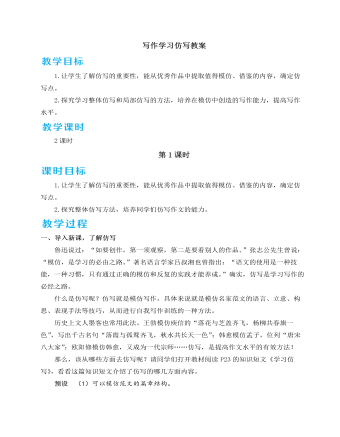
人教部编版语文八年级下册写作学习仿写教案
3.教师小结(1)仿写点分析。要认真分析、研究片段中的精彩之处,力求准确把握仿文的“外形”和“神韵”。 (2)仿写内容选择。选择自己熟悉的、有情感体验的内容,切不可为了“仿”而机械模仿甚至抄袭。(3)变通与创新。 分析名家名作的语言特点、写法规律,以“仿写”为阶梯、桥梁,达到写作的新高度、新领域。【设计意图】学生在阅读教学和句式仿写训练中对修辞手法、描写手法和表达方式等知识接触较多,如《社戏》教学中对心理描写手法的分析,《安塞腰鼓》课后布置的修辞手法的仿写训练,学生对此已有亲和感。本环节的主要目的在于让学生在实践中对仿写点的分析、仿写内容的选择、仿写的变通与创新产生切身的体悟。三、总结存储1.课堂小结学会根据需要恰当选择具体的、合理的仿写点,达到以“他山之石”来“攻玉”,“假名家之手”写“我心”的目的,是仿写的真正要义。2.实践演练完成课本P24“写作实践”第三题。
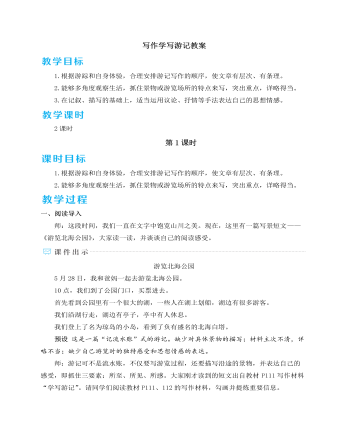
人教部编版语文八年级下册写作学写游记教案
4.组织材料师:一篇游记作品,既要有“灵魂”“血肉”,还得有“筋骨”——材料安排。请大家运用我们上节课学习的方法来组织材料。方法:(1)按照自己的游踪或独特体验,安排写作顺序。(2)能突出参观场所特征的要详写,其余的略写或不写。(3)丰富文章内容:适当加入叙事,引入一些典故、传说、史料、评价或诗文名句。示例:(1)写作顺序:以作者的参观路线为线索。(2)详略安排:详写鲁迅先生北京故居的工作室兼卧室,以突出鲁迅简朴、惜时的品质和忘我工作的精神品质;详写陈列大厅是为了赞扬先生的民族精神。其余的略写。(3)引入内容:引用古诗句“望崦嵫而勿迫,恐鹈之先鸣”,表现先生惜时的品质。(生交流,师点评)预设 (1)写作顺序:一楼的青铜器—二楼的陶器—三楼的古代画作。
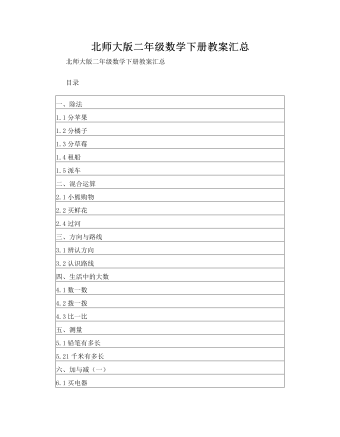
二年级数学下册教案汇总
教学反思:1、引导学生体验抽象除法竖式的过程。学生在学习表内乘除法时,利用乘法口诀已经能够在算式上直接写出得数。教材安排了“18个苹果,每盘放6个,可以放几盘”的“分苹果”活动,列举了四种解决这一问题的方法。在此基础上,引导学生按照自己的想法来分这些苹果,进而再由对除法竖式有一定了解的学生介绍竖式计算,并且把竖式中的每一步所表示的含义和分苹果的活动紧密联系起来。2、在探究中理解除法的试商方法。学生通过实际操作、观察比较,培养学生质疑和创新精神,学会学习、积累数学活动经验的有意义的学习过程。3、不足:这节课上得不够生动、活泼。
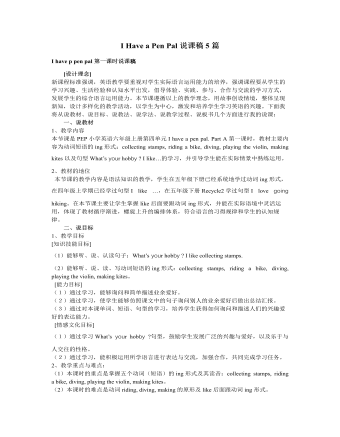
人教版新课标PEP小学英语六年级上册I Have a Pen Pal说课稿5篇
一、说教学思想我在本课教学设计中坚持以人文科技教育为中心,以学生为主体;以兴趣为支点、以交流为目的、以活动任务为途径的教学原则。通过最新的计算机多媒体等教学手段创造贴近生活的教学情境,并在课堂上大量地采用互动式教学模式(包括人机互动),使学生自然进入英语世界;在教学过程中,综合运用情景教学、任务型教学、交际教学、整体语言教学等手段,全面培养学生的听、说、读、写等语言综合运用能力。在课内、课外全面利用网络技术,如在线英语学习、博客(Blog)、魔灯(Moodle)、QQ群、论坛(BBS)等手段,做到英语与信息技术的完美整合。二、说教材与教材处理本课采用的教材是是人教版小学英语(PEP)六年级上册,内容为学生学完I Have a Pen Pal后的一节综合实践活动(复习)课。本单元教学重点为E-mail和英语书信的写法。通过该单元的学习,学生基本了解一些英语书信书写的方法。但是学生还没有利用计算机网络去写英文E-mail(包括写E-mail内容和写E-mail地址。)
人教部编版七年级下册古代诗歌五首教案
师小结:《己亥杂诗》(其五)抒发了诗人离京南返的无尽愁绪,也表达出诗人虽已辞官,仍决心为国效力、奉献终生的决心,以及对国家民族的那份执着挚爱之情。全诗寄情于物,形象贴切,浑然一体,感人至深。【设计意图】本环节运用知人论世的方法,巧妙地将诗歌和写作背景糅合在一起,让学生逐步深入地理解诗人的情感和志趣。五、总结存储1.教师总结。本课学习了两首诗,让我们又获得了新的教益。《游山西村》中的名句“山重水复疑无路,柳暗花明又一村”让我们明白了在困境中坚持下去,也许会出现令人豁然开朗的转变,世间事物是消长变化的。《己亥杂诗》(其五)中的名句“落红不是无情物,化作春泥更护花”让我们感受到作者的爱国忧民、无私奉献精神。希望同学们能热爱传统文化,热爱古代的诗歌艺术,让这些经典文化伴你们健康成长。2.布置作业。(1)背诵并用楷书工整、规范地默写这两首诗。(2)选择感受最深的一首,发挥想象,写成一篇文章。(500字左右)。
人教版新目标初中英语八年级下册If you go to the party, you’ll have a great time说课稿9篇
二、说教学目标:由于本单元的五个话题都涉及到了不同的条件下所产生的各种结果。所以我确定的本课时的教学目标是:通过谈论图片和身边常见的话题,学会if引导的条件状语从句的用法。即用if条件状语从句作出假设,用will来谈论结果。三、说教学重点:一方面,由于本单元的话题是谈论结果,那么在不同的情境下其结果也会不一样,所以根据不同的情境来推测并谈论各种结果是个重点。另一方面,因为学生没有一个好的语言氛围,所以我侧重于听力和口语的培养,多创设情境能让学生发挥想象,以此激发他们的学习兴趣,。四、说教学难点学生容易记住主句用一般将来时态,从句用一般现在时态,但在判断主句、从句方面容易混淆,因此,我将正确使用主句从句的时态定为本课时的难点。
人教版新目标初中英语八年级下册Why don’t you get her a scarf说课稿7篇
[设计意图: 该环节可让学生展示自我,拓宽运用英语能力,把所学的知识在实际交流中进行运用,实现新课程倡导的“为用而学, 在用中学,学了就用”,从而提高学生综合运用英语的能力。选择母亲节来临为母亲选择礼物这一话题也是借此机会对学生进行感恩教育,并在学生的热烈讨论中告诉学生gift can’t be everything, everything can be a gift.使学生的情感得到升华。] Step9 Summary T: What have we learned in this class? Presents/ Gifts Comments Suggestions Album----special Why don’t you … Bicycle----useful Why not … +V原形 Calendar----interesting How about … Scarf----personal What about … +V-ing/ 名词 [设计意图:此环节的设计,有助于理清脉络,进一步巩固所学知识。] Step10 Homework 1. listen to 1b (do 1b and imitate ) 2. Write down your dialogue 3. Surf the internet about the differences of gift giving between China and foreign countries. [设计意图:作业1听力,由于1b听力和后面的2a相似,所以课堂上不再重复做,将其留做课后作业,上课下课时刻关注学生听力能力的培养和训练。2是将学生课堂上的说落实到课后的写。3是让学生通过自主学习,了解中西方文化的差异。分层次布置作业,体现出因材施教的教学理念。]
人音版小学音乐二年级下册小蜜蜂说课稿
出示课件,在茂密的大森林里,有一只小蜜蜂讲述它的故事——既歌曲的歌词。在演唱歌曲时把学生带入童话的世界里,学生乐学的氛围立即呈现。学习效果会事半功倍。唱的会更加感情充沛。因为有了具体的形象和感情基础,会让学生情不自禁的进入角色的。唱歌词的时候,用慢速指导学生唱好八分音符的小节,同时对“飞回蜂房”四个字的演唱要即使强调和纠正。在唱好歌曲的基础上,教师指导学生用唱名唱谱。这样既降低了唱谱的难度,又会达到很好的效果。3小组合作,激发创造力。本课的教育对象是小学二年级的学生,他们以形象思维为主,好奇、好动、模仿力强。能用打击乐器奏出强弱、长短不同的音。教师再次播放乐曲伴奏,和学生一起表演蜜蜂劳动的情景。之后教师拿出打击乐器。让学生分别判断出各打击乐器的声音特点,再分组合作练习为歌曲配伴奏。教师做适当的指导。小组派代表给大家展示编配的结果。其他学生做演唱,再给予适当的评价。