-
人教版新课标高中物理必修1运动快慢的描述─速度教案2篇
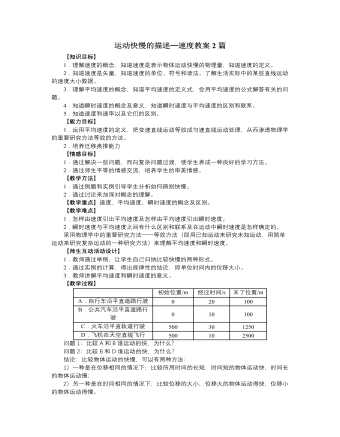
生:还可以从表盘上直接读出公里里程.师:日常生活中的“速度”有时指速度,也有时指速率,要看实际的物理情景。[讨论与交流]甲、乙两位同学用不同的时间围绕操场跑了一圈,都回到了出发点,他们的平均速度相同吗?怎样比较他们运动的快慢?学生讨论,体验平均速度的缺陷,引入平均速率。生1:位移都是零,平均速度等于位移跟发生这段位移所用时间的比值,所以他们的平均速度都是零。生2:即使一位同学站在原地不跑,他的平均速度也是零啊,可我们运动会上不是这样比快慢的,如果这样,那多不公平啊?师:平均速度v=Δx/Δt,甲、乙的位移都为零,所以他们的平均速度也都等于零.在这里平均速度无法显示他们运动快慢的不同,要用到另一物理量:平均速率.平均速率等于物体运动通过的路程跟所用时间的比值.他们两人通过的路程相同且都不为零,但所用时间不同.显然用时短的运动得快,也就是平均速率大.生:这不是我们初中学过的速度吗?
人教版新课标高中物理必修2万有引力定律教案2篇
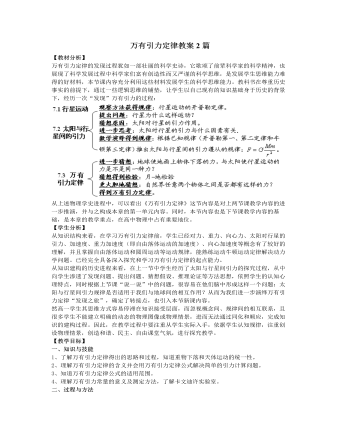
3.适用条件(1)万有引力定律只适用于质点间引力大小的计算。当两物体间的距离远远大于每个物体的尺寸时,物体可以看成质点,直接使用万有引力定律计算。(模型)研究相互接触的两个人之间的万有引力时,不能把他们看作质点。(2)当两物体是质量均匀分布的球体时,它们间的引力也可直接用公式计算,但式中的r是指两球心间距离。研究太阳和地球之间的万有引力,可以把它们看作质量均匀的球体。当研究物体不能看成质点时,可以把物体假想分割成无数个质点,求出两个物体上每个质点与另一物体上所有质点的万有引力,然后求合力,这是微积分的思想。万有引力定律产生于对太阳系行星运动的研究,但它对物质运动的适用性却要广泛得多。可以这样说,宇宙中凡有引力参与的一切复杂的现象,无不要归结到这样一条十分简洁的定律之中,这不能不使人惊叹宇宙万物超乎寻常的和谐及人类理性思考所具有的统摄力。
人教版新课标高中物理必修2动能和动能定理教案2篇
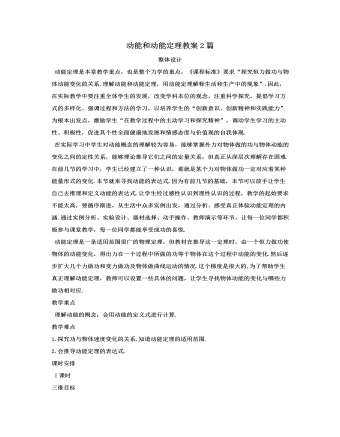
二、课堂教学(课前由科代表发回预习学案)1、教师根据预习学案检查结果提出问题(用多媒体展示),引导全班讨论(重点讨论:①、为什么动能的表达式一定是 mV2 ?你如何得出这个结论?②、力在一个过程中对物体所做的功,和物体在这个过程中动能的变化量有什么关系?你如何得出这个结论?这个做功的力和F=ma中的力F有什么关系)。有困难的小组应及时问老师。老师在这个过程中巡视指导。2、学生自主阅读课文“7 动能和动能定理”中的“动能的表达式”,然后完成如下练习(教师在此过程中巡视指导):2.1尝试推出动能的表达式(鼓励会推导的同学积极上台板演,老师引导讨论)。2.2写出动能的小结(认真阅读教材p66倒数第二段、第三段,结合你推导动能表达式的过程,认真思考后四人一组讨论:①、动能是矢量还是标量?②、动能的单位是什么?③、你认为应从哪几方面来理解动能?)

人教版新课标高中物理必修2太阳与行星间的引力教案2篇
【学习内容分析】在行星运动规律与万有引力定律两节内容之间安排本节内容,是为了更突出发现万有引力定律的这个科学过程。如果说上一节内容是从运动学角度描述行星运动的话,那么,本节内容是从动力学角度来研究行星运动的,研究过程是依据已有规律进行的演绎推理过程。教科书在尊重历史事实的前提下,通过一些逻辑思维的铺垫,让学生以自己现有的知识基础身于历史的背景下,经历一次“发现”万有引力的过程,因此体验物理学研究问题的方法就成为主要的教学目标。【学情分析】在学太阳对行星的引力之前,学生已经对力、重力、向心力、加速度、重力加速度、向心加速度等概念有了较好的理解,并且掌握自由落体运动和圆周运动等运动规律,能熟练运用牛顿运动定律解决动力学问题。已经完全具备深入探究和学习万有引力定律的起点能力。所以在推导太阳与行星运动规律时,教师可以要求学生自主地运用原有的知识进行推导,并要求说明每一步推理的理论依据是什么,教师仅在难点问题上做适当的点拨。
人教版新课标高中物理必修2探究弹性势能的表达式教案2篇
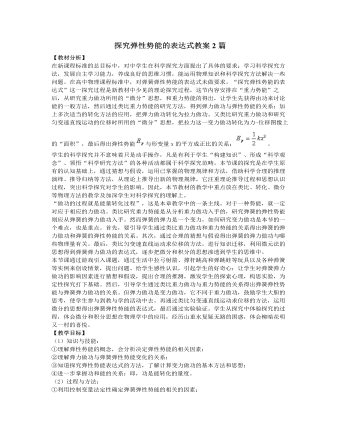
“做功的过程就是能量转化过程”,这是本章教学中的一条主线。对于一种势能,就一定对应于相应的力做功。类比研究重力势能是从分析重力做功入手的,研究弹簧的弹性势能则应从弹簧的弹力做功入手。然而弹簧的弹力是一个变力,如何研究变力做功是本节的一个难点,也是重点。首先,要引导学生通过类比重力做功和重力势能的关系得出弹簧的弹力做功和弹簧的弹性势能的关系。其次,通过合理的猜想与假设得出弹簧的弹力做功与哪些物理量有关。最后,类比匀变速直线运动求位移的方法,进行知识迁移,利用微元法的思想得到弹簧弹力做功的表达式,逐步把微分和积分的思想渗透到学生的思维中。本节课通过游戏引入课题,通过生活中拉弓射箭、撑杆跳高和弹跳蛙等玩具以及各种弹簧等实例来创设情景,提出问题。给学生感性认识,引起学生的好奇心;让学生对弹簧弹力做功的影响因素进行猜想和假设,提出合理的推测,激发学生的探索心理,构思实验,为定性探究打下基础。然后,引导学生通过类比重力做功与重力势能的关系得出弹簧弹性势能与弹簧弹力做功的关系。
人教版新课标高中物理必修2向心加速度教案2篇
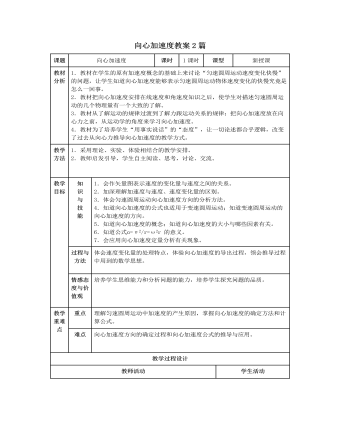
1.教材在学生的原有加速度概念的基础上来讨论“匀速圆周运动速度变化快慢”的问题,让学生知道向心加速度能够表示匀速圆周运动物体速度变化的快慢究竟是怎么一回事。2.教材把向心加速度安排在线速度和角速度知识之后,使学生对描述匀速圆周运动的几个物理量有一个大致的了解。3.教材从了解运动的规律过渡到了解力跟运动关系的规律;把向心加速度放在向心力之前,从运动学的角度来学习向心加速度。4.教材为了培养学生“用事实说话”的“态度”,让一切论述都合乎逻辑,改变了过去从向心力推导向心加速度的教学方式。1.采用理论、实验、体验相结合的教学安排。2.教师启发引导,学生自主阅读、思考,讨论、交流。知识与技能1.会作矢量图表示速度的变化量与速度之间的关系。2.加深理解加速度与速度、速度变化量的区别。3.体会匀速圆周运动向心加速度方向的分析方法。4.知道向心加速度的公式也适用于变速圆周运动;知道变速圆周运动的向心加速度的方向。
人教版新课标高中物理必修2验证机械能守恒定律教案2篇
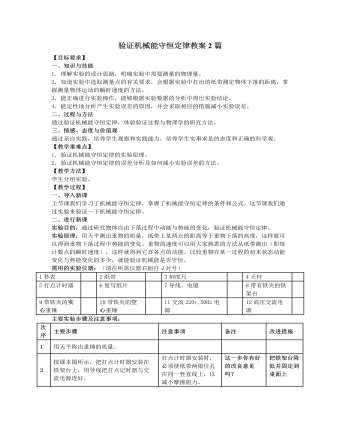
教学目标㈠知识与技能1.要弄清实验目的,本实验为验证性实验,目的是利用重物的自由下落验证机械能守恒定律。2.要明确实验原理,掌握实验的操作方法与技巧、学会实验数据的采集与处理,能够进行实验误差的分析,从而使我们对机械能守恒定律的认识,不止停留在理论的推导上,而且还能够通过亲自操作和实际观测,从感性上增加认识,深化对机械能守恒定律的理解。3.要明确织带选取及测量瞬时速度简单而准确的方法。㈡过程与方法1.通过学生自主学习,培养学生设计实验、采集数据,处理数据及实验误差分析的能力。2.通过同学们的亲自操作和实际观测掌握实验的方法与技巧。3.通过对纸带的处理过程培养学生获取信息、处理信息的能力,体会处理问题的方法,领悟如何间接测一些不能直接测量的物理量的方法。
人教版新课标高中物理必修2追寻守恒量—能量教案2篇
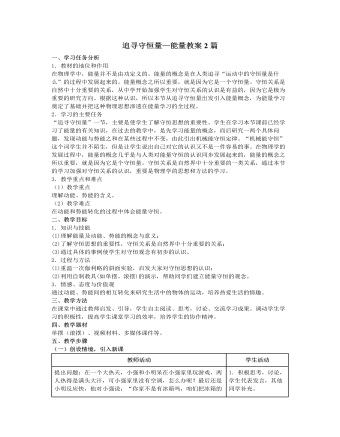
一、学习任务分析1.教材的地位和作用在物理学中,能量并不是由功定义的。能量的概念是在人类追寻“运动中的守恒量是什么”的过程中发展起来的。能量概念之所以重要,就是因为它是一个守恒量。守恒关系是自然中十分重要的关系,从中学开始加强学生对守恒关系的认识是有益的,因为它是极为重要的研究方向。根据这种认识,所以本节从追寻守恒量出发引入能量概念,为能量学习奠定了基础并把这种物理思想渗透在能量学习的全过程。2.学习的主要任务“追寻守恒量”一节,主要是使学生了解守恒思想的重要性。学生在学习本节课前已经学习了能量的有关知识,在过去的教学中,是先学习能量的概念,而后研究一两个具体问题,发现动能与势能之和在某些过程中不变,由此引出机械能守恒定律。“机械能守恒”这个词学生并不陌生,但是让学生说出自己对它的认识又不是一件容易的事。
人教版新课标高中物理必修2圆周运动教案2篇
《匀速圆周运动》为高中物理必修2第五章第4节.它是学生在充分掌握了曲线运动的规律和曲线运动问题的处理方法后,接触到的又一个美丽的曲线运动,本节内容作为该章节的重要部分,主要要向学生介绍描述圆周运动的几个基本概念,为后继的学习打下一个良好的基础。人教版教材有一个的特点就是以实验事实为基础,让学生得出感性认识,再通过理论分析总结出规律,从而形成理性认识。教科书在列举了生活中了一些圆周运动情景后,通过观察自行车大齿轮、小齿轮、后轮的关联转动,提出了描述圆周运动的物体运动快慢的问题。二、教学目标1.知识与技能①知道什么是圆周运动、什么是匀速圆周运动。理解线速度的概念;理解角速度和周期的概念,会用它们的公式进行计算。②理解线速度、角速度、周期之间的关系:v=rω=2πr/T。③理解匀速圆周运动是变速运动。④能够用匀速圆周运动的有关公式分析和解决具体情景中的问题。
人教版高中历史必修2殖民扩张与世界市场的拓展教案
●活动与探究从葡萄牙、西班牙、荷兰的兴衰历程,从英国的强盛历程,我们从中可获得什么启示?启示:积极发展本国的工商业;实现制度创新;抓住机遇,及时更新观念;建立能保障自身经济顺利发展的国防力量,尤其是海军力量;积极发展海外贸易,实行对外开放……★本课小结16世纪后期荷兰积极向海外殖民扩张,在17世纪建立了世界范围内的殖民帝国;17世纪开始,英国也积极向海外殖民扩张,并与荷兰、法国进行了激烈的争夺,到18世纪中期,英国成为世界上最大的殖民国家,最终确立了世界殖民霸权;新航路开辟后,伴随着殖民扩张,人类的商业活动开始在全球范围内开展,人类的经济活动由于世界市场的出现而第一次被广泛地联系在一起,而西欧国家对殖民地财富、资源、劳动力的暴力掠夺,是欧洲发展和兴旺的重要条件,也是亚、非、拉美灾难的根源。
人教版新课标高中物理必修1伽利略对自由落体运动的研究教案2篇
猜想:既然物体下落过程中的运动情况与物体质量无关,那么为什么在现实生活中,不同物体的落体运动,下落快慢不同呢?我们能否猜想是由于空气阻力的作用造成的呢?如果没有空气阻力将会怎样呢?学生讨论后回答.三、猜想与假说伽利略认为,自由落体是一种最简单的变速运动.他设想,最简单的变速运动的速度应该是均匀变化的.但是,速度的变化怎样才算均匀呢?他考虑了两种可能:一种是速度的变化对时间来说是均匀的,即经过相等的时间,速度的变化相等;另一种是速度的变化对位移来说是均匀的,即经过相等的位移,速度的变化相等.伽利略假设第一种方式最简单,并把这种运动叫做匀变速运动.四、实验验证实验验证是检验理论正确与否的唯一标准.任何结论和猜想都必须经过实验验证,否则不成理论.猜想或假说只有通过验证才会成为理论.所谓实验验证就是任何人,在理论条件下去操作都能到得实验结果,它具有任意性,但不是无条件的,实验是在一定条件下的验证,而与实际有区别.
人教版新课标高中物理必修1时间和位移教案2篇
一、教学目标1、知识与技能(1)知道时间和时刻的含义以及它们的区别。知道在实验室测量时间的方法。(2)知道位移的概念,知道它是表示质点位置变动的物理量,知道它是矢量,可以用有向线段来表示。(3)知道位移和路程的区别。2、过程与方法(1)联系生活实际,通过师生共同讨论的方法来确定时刻与时间、位置、位移及其路程的关系。(2)通过类比的数学方法用数学上的点、线段来突破时刻与时间的关系,直线运动的位置和位移。(3)尝试运用所学的概念判断一些与生活相关的实际问题。3.情感态度与价值观(1)通过本节课的学习,使学生体会到物理现象和规律所蕴含的自然美。(2)通过对问题的讨论,培养学生勇于探究与日常生活有关的物理学问题。(3)培养学生有主动与他人合作的团队精神,提高学生的科学素养。二、教学重点、难点重点:1、时间、时刻、位置、位移的概念。2、矢量与标量的概念。
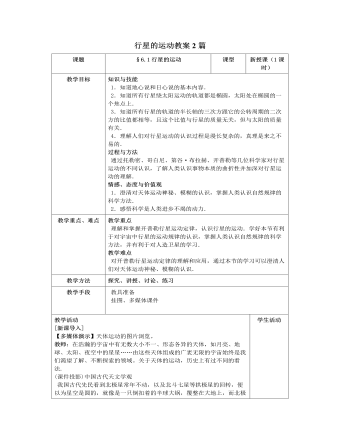
人教版新课标高中物理必修2行星的运动教案2篇
知识与技能1.知道地心说和日心说的基本内容.2.知道所有行星绕太阳运动的轨道都是椭圆,太阳处在椭圆的一个焦点上.3.知道所有行星的轨道的半长轴的三次方跟它的公转周期的二次方的比值都相等,且这个比值与行星的质量无关,但与太阳的质量有关.4.理解人们对行星运动的认识过程是漫长复杂的,真理是来之不易的.过程与方法通过托勒密、哥白尼、第谷·布拉赫、开普勒等几位科学家对行星运动的不同认识,了解人类认识事物本质的曲折性并加深对行星运动的理解.情感、态度与价值观1.澄清对天体运动裨秘、模糊的认识,掌握人类认识自然规律的科学方法.2.感悟科学是人类进步不竭的动力.教学重点理解和掌握开普勒行星运动定律,认识行星的运动.学好本节有利于对宇宙中行星的运动规律的认识,掌握人类认识自然规律的科学方法,并有利于对人造卫星的学习.
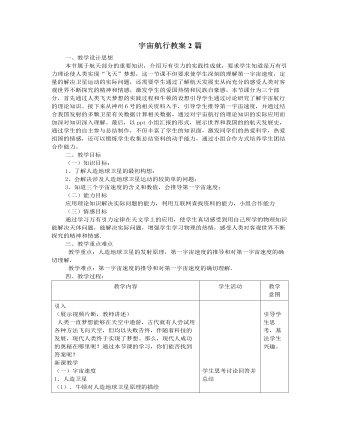
人教版新课标高中物理必修2宇宙航行教案2篇
动画展示三个宇宙速度(四) 让学生具有振兴中华的使命感与责任感本节课的最后,播放了一段美国登月的视频,让学生发现一些奇妙的物理现象,引导学生发现月球的背景是什么颜色,宇航员行走的模样等等,预计不久的将来,哪个国家也将登上月球,同学们高呼“中国”,那么我们现在能做些什么呢,让同学感想到:我们是祖国的未来的希望,现在需要努力学习科学文化知识,将来为祖国的航天事业做贡献。要培养学生坚韧不拨、勇于探索、协力合作的科学精神以及严谨求实、谦虚谨慎、勇于质疑科学态度;也要培养学习者热爱科学、热爱祖国的情感;努力学习、振兴中华的责任感。这些策略在本案例中得到了体现。(五)练习反馈,拓展延伸:[例题1]“2003年10月15日9时,我国神舟五号宇宙飞船在酒泉卫星发射中心成功发射,把我国第一位航天员杨利伟送入太空。飞船绕地球飞行14圈后,于10月16日6时23分安全降落在内蒙古主着陆场。”
新人教版高中英语必修3Unit 3 Diverse Cultures教学设计三
The price is the same as(the price was)before the war.价格与战前相同。(4)定语从句中的“关系代词+助动词be”可以省略。The ticket(that/which was)booked by his sister has been sent to him.他妹妹订的那张票已送到了他那里。Step 5 PracticeActivity 3(1) Guide students to complete the four activities in the Using Structures part of exercise book, in which activities 1 and 2 focus on ellipsis in dialogue answers, activity 3 focus on signs and headlines, two typical situations where ellipsis is used, and activity 4 focus on ellipsis in diary, an informal style.(2) Combine the examples in the above activities, ask students to summarize the omitted situations in groups, and make their own summary into a poster, and post it on the class wall after class to share with the class.(This step should give full play to the subjectivity of students, and teachers should encourage students to conclude different ellipsis phenomena according to their own understanding, they can conclude according to the different parts omitted in the sentence.)Step 6 Homework1. Understand and master the usages of ellipsis;2. Finish the other exercises in Using structures of Workbook.1、通过本节内容学习,学生是否理解和掌握省略的用法;2、通过本节内容学习,学生能否根据上下文语境或情景恢复句子中省略的成分,体会使用省略的效果;3、通过本节内容学习,学生能否独立完成练习册和导学案中的相关练习。
新人教版高中英语必修3Unit 3 Diverse Cultures教学设计二
(2)Consolidate key vocabulary.Ask the students to complete the exercises of activity 6 by themselves. Then ask them to check the answers with their partners.(The first language:Damage of the 1906 San Francisco earthquake and fire.A second language: Yunnan - one of the most diverse provinces in China).Step 5 Language points1. The teacher asks the students to read the text carefully, find out the more words and long and difficult sentences in the text and draw lines, understand the use of vocabulary, and analyze the structure of long and difficult sentences.2. The teacher explains and summarizes the usage of core vocabulary and asks the students to take notes.3. The teacher analyzes and explains the long and difficult sentences that the students don't understand, so that the students can understand them better.Step 6 Homework1. Read the text again, in-depth understanding of the text;2. Master the use of core vocabulary and understand the long and difficult sentences.3. Complete relevant exercises in the guide plan.1、通过本节内容学习,学生是否理解和掌握阅读文本中的新词汇的意义与用法;2、通过本节内容学习,学生能否结合文本特点了解文章的结构和作者的写作逻辑;3、通过本节内容学习,学生能否了解旧金山的城市风貌、文化特色,以及加利福尼亚州的历史,体会多元文化对美国的影响。
新人教版高中英语必修3Unit 3 Diverse Cultures教学设计四
该板块的活动主题是“介绍一个有显著文化特征的地方”( Describe a place with distinctive cultural identity)。该板块通过介绍中国城继续聚焦中国文化。本单元主题图呈现的是旧金山中国城的典型景象, Reading and Thinking部分也提到中国城,为该板块作铺垫。介绍中国城的目的主要是体现中国文化与美国多元文化的关系,它是美国多元文化的重要组成部分。中国城也是海外华人的精神家园和传播中国文化的重要窗口,外国人在中国城能近距离体验中国文化。1. Read the text to understand the cultural characteristics of Chinatown in San Francisco and the relationship between Chinese culture and American multiculturalism;2. Through reading, learn to comb the main information of the article, understand the author's writing purpose and writing characteristics;3. Learn to give a comprehensive, accurate, and organized description of the city or town you live in;Learn to revise and evaluate your writing.Importance:1. Guide the students to read the introduction of Chinatown in San Francisco and grasp its writing characteristics;2. Guide students to introduce their city or town in a comprehensive, accurate and organized way;3. Learn to comb the main information of the article, understand the author's writing purpose, and master the core vocabulary.
新人教版高中英语必修3Unit 3 Diverse Cultures教学设计一
Activity 81.Grasp the main idea of the listening.Listen to the tape and answer the following questions:Who are the two speakers in the listening? What is their relationship?What is the main idea of the first part of the listening? How about the second part?2.Complete the passage.Ask the students to quickly review the summaries of the two listening materials in activity 2. Then play the recording for the second time.Ask them to complete the passage and fill in the blanks.3.Play the recording again and ask the students to use the structure diagram to comb the information structure in the listening.(While listening, take notes. Capture key information quickly and accurately.)Step 8 Talking Activity 91.Focus on the listening text.Listen to the students and listen to the tape. Let them understand the attitudes of Wu Yue and Justin in the conversation.How does Wu Yue feel about Chinese minority cultures?What does Justin think of the Miao and Dong cultures?How do you know that?2.learn functional items that express concerns.Ask students to focus on the expressions listed in activity. 3.And try to analyze the meaning they convey, including praise (Super!).Agree (Exactly!)"(You're kidding.!)Tell me more about it. Tell me more about it.For example, "Yeah Sure." "Definitely!" "Certainly!" "No kidding!" "No wonder!" and so on.4.Ask the students to have conversations in small groups, acting as Jsim and his friends.Justin shares his travels in Guizhou with friends and his thoughts;Justin's friends should give appropriate feedback, express their interest in relevant information, and ask for information when necessary.In order to enrich the dialogue, teachers can expand and supplement the introduction of Miao, dong, Lusheng and Dong Dage.After the group practice, the teacher can choose several groups of students to show, and let the rest of the students listen carefully, after listening to the best performance of the group, and give at least two reasons.
新人教版高中英语必修3Unit 2 Morals and Virtues教学设计三
The joke set her crying.这个玩笑使她哭起来。Step 5 ReadingActivity 31. Students read the small text in activity 3. The teacher provides several small questions to check whether students understand the content of the text and the ideographic function of the -ing form in the text.*Where are those people?*Why did Dr Bethune come to China?*How did he help the Chinese people during the war?*What did Chairman Mao Zedong say about him?2. Ss try to rewrite some sentences using the -ing form. Then check the answers. When checking the answers, the teacher can ask different students to read the rewritten sentences and give comments.Answers:1. he became very interested in medicine, deciding to become a doctor.2. …after hearing that many people were dying in the war.3. Helping to organise hospitals, he taught doctors and nurses, and showed people how to give first aid./ He helped to organise hospitals, teaching doctors and nurses, and showing people how to give first aid.4. …praising Dr Bethune as a hero to be remembered in China.Step 6 PracticeActivity 4Students complete grammar activities 2 and 3 on page 69 of the workbook.Step 6 Homework1. Understand and master the functions and usage of the -ing form;2. Finish the other exercises in Using structures.1、通过本节内容学习,学生是否理解和掌握动词-ing形式作宾语补足语语和状语语的功能和意义;2、通过本节内容学习,学生能否正确使用动词-ing形式描述人物的行为、动作及其经历;3、通过本节内容学习,学生能否独立完成练习册和导学案中的相关练习。
新人教版高中英语必修3Unit 2 Morals and Virtues教学设计二
Activity 41. Students complete the task of activity 4, then teachers and students check the answers. 2. The teacher organized the students to work together and asked them to use the tables and mind maps sorted out before to retold the important choices in Lin Qiaozhi's life and their resultsStep 5 Language points1. The teacher asks the students to read the text carefully, find out the core words and long and difficult sentences in the text and draw lines, understand the use of vocabulary, and analyze the structure of long and difficult sentences. 2. The teacher explains and summarizes the usage of core vocabulary and asks the students to take notes. 3. The teacher analyzes and explains the long and difficult sentences that the students don't understand, so that the students can understand them better. Step 6 Homework1. Read the text again, in-depth understanding of the text; 2. Master the use of core vocabulary and understand the long and difficult sentences. 3. Complete relevant exercises in the guide plan. 1、通过本节内容学习,学生是否理解和掌握阅读文本中的新词汇的意义与用法;2、通过本节内容学习,学生能否结合文本特点总结林巧稚的人生原则和人格品质特征;3、通过本节内容学习,学生能否针对人生抉择发表自己的看法;能否全面地、客观地、理性地看待问题,进而对道德和人性有更加深入的思考和理解。