-
人教版新课标高中物理必修1摩擦力教案2篇
l.知识与技能:(1)知道摩擦力产生的条件。(2)能在简单问题中,根据物体的运动状态,判断静摩擦力的有无、大小和方向;知道存在着最大静摩擦力。(3)掌握动磨擦因数,会在具体问题中计算滑动磨擦力,掌握判定摩擦力方向的方法。(4)知道影响到摩擦因数的因素。2.过程与方法:通过观察演示实验,概括出摩擦力产生的条件及摩擦力的特点,培养学生的观察、概括能力。通过静摩擦力与滑动摩擦力的区别对比,培养学生分析综合能力。3.情感态度价值观:在分析物体所受摩擦力时,突出主要矛盾,忽略次要因素及无关因素,总结出摩擦力产生的条件和规律。二、重点、难点分析1.本节课的内容分滑动摩擦力和静摩擦力两部分。重点是摩擦力产生的条件、特性和规律,通过演示实验得出关系f=μN。2.难点是学生有初中的知识,往往误认为压力N的大小总是跟滑动物体所受的重力相等,因此必须指出只有当两物体的接触面垂直,物体在水平拉力作用下,沿水平面滑动时,压力N的大小才跟物体所受的重力相等。
人教版新课标高中物理必修2功率教案2篇
1.用CAI课件模拟汽车的启动过程。师生共同讨论:①如果作用在物体上的力为恒力,且物体以匀速运动,则力对物体做功的功率保持不变。此情况下,任意一段时间内的平均功率与任一瞬时的瞬时功率都是相同的。②很多动力机器通常有一个额定功率,且通常使其在额定功率状态工作(如汽车),根据P=FV可知:当路面阻力较小时,牵引力也小,速度大,即汽车可以跑得快些;当路面阻力较大,或爬坡时,需要比较大的牵引力,速度必须小。这就是爬坡时汽车换低速挡的道理。③如果动力机器在实际功率小于额定功率的条件下工作,例如汽车刚刚起动后的一段时间内,速度逐渐增大过程中,牵引力仍可增大,即F和v可以同时增大,但是这一情况应以二者乘积等于额定功率为限度,即当实际功率大于额定功率以后,这种情况不可能实现。
人教版新课标高中物理必修2平抛运动教案2篇
(五)平抛运动规律的应用例1:一架老式飞机在高出海面45m的高处,以80m/s的速度水平飞行,为了使飞机上投下的炸弹落在停在海面上的敌船,应该在与轰炸目标的水平距离为多远的地方投弹?不计空气阻力。分析:对于这道题我们可以从以下几个方面来考虑:(1)从水平飞行的飞机上投下的炸弹,做什么运动?为什么?(2)炸弹的这种运动可分解为哪两个什么样的分运动?3)要想使炸弹投到指定的目标处,你认为炸弹落地前在水平方向通过的距离与投弹时飞机离目标的水平距离之间有什么关系?拓展:1、式飞机在高出海面45m的高处,以80m/s的速度水平飞行,尾追一艘以15m/s逃逸的敌船,为了使飞机上投下的炸弹正好击中敌船,应该在与轰炸目标的水平距离为多远的地方投弹?不计空气阻力。2、在一次摩托车跨越壕沟的表演中,摩托车从壕沟的一侧以速度v=40m/s沿水平方向向另一侧,壕沟两侧的高度及宽度如图所示,摩托车可看做质点,不计空气阻力。(1)判断摩托车能否跨越壕沟?请计算说明(2)若能跨过,求落地速度?
人教版新课标高中物理必修2向心力教案2篇
3.进一步体会力是产生加速度的原因,并通过牛顿第二定律来理解匀速圆周运动、变速圆周运动及一般曲线运动的各自特点。(三)、情感、态度与价值观1.在实验中,培养学生动手、探究的习惯。2.体会实验的意义,感受成功的快乐,激发学生探究问题的热情、乐于学习的品质。教学重点1.体会牛顿第二定律在向心力上的应用。2.明确向心力的意义、作用、公式及其变形,并经行计算。教学难点1.对向心力的理解及来源的寻找。2.运用向心力、向心加速度的知识解决圆周运动问题。教学过程(一)、 引入新课:复习提问:匀速圆周运动的物体的加速度——向心加速度,它的方向和大小有何特点呢?学生回答后进一步引导:那做匀速圆周运动物体的受力有什么特点呢?是什么力使物体做圆周运动而不沿直线飞出?请同学们先阅读教材
人教版高中历史必修1辛亥革命教案2篇
①从政府人员组成看,南京政府是一个以资产阶级革命派为主体的政府。②从政府颁发的法令和措施看,这些法令体现了资产阶级民主革命的要求,对于发展民族资本主义经济、资产阶级民主政治和文化教育以及改革社会风气,都起了积极作用。③从颁布的《中华民国临时约法》看,宪法体现了三权分立的政治体制,体现了资产阶级民主主义的要求,是中国历史上第一部资产阶级民主宪法,具有反封建专制制度的进步意义。(2)从南京临时政府的内外政策分析南京政府的根本弱点①未彻底地反封建。它没有采取比较彻底的反对封建主义的措施,特别是对封建统治的基础——地主阶级土地所有制没有触动,这样,南京临时政府也就不能真正地把广大人民群众动员起来,因而缺乏真正的群众基础。
新人教版高中英语必修1Unit 4 Natural Disasters-Reading & Thinking教案
5. Read to get detailed information about Paragraph 5.Q1. What shows the revival of Tangshan?Q2. How can Tangshan revive itself and get up on its feet again?Q3. In times of disasters, how can we go through it?T: In times of disasters, we should unify, show the wisdom and stay positive.Step 4 Activity 4 Highlighting the theme and reflecting1. Make a summary of the text.2. Further understand the titleQ: After our learning, why do you think the earth didn’t sleep on that night?T: An earthquake happened. The people in the earthquake suffered a lot, and the people outside Tangshan were concerned about the people there a lot.3. Reflect through discussion on what can be learnt after reading.T: Disasters are powerful. Unpreparedness can be deadly. Life is weak, but if people work together to help each other, disasters can be defeated.There is no love from disaster, but we have love in the human heart.Step 5 Assignment How does the writer convey that the earthquake was deadly, and that people were helpless during the earthquake? Try to find some attractive and impressive expressions and note them down.
新人教版高中英语必修1Welcome Unit-Reading for Writing教案
教学目标知识目标:让学生更好理解如何恰当地写一个人的信息介绍,并能让学生熟练地使用一些写作技能。能力目标:培养学生的写作能力和团队协作能力。情感目标:提升学生对写作的兴趣。教学重难点 教学重点:如何能让学生更好地理解个人信息介绍。教学难点:如何能让学生通过适当地使用一些写作技能来写一篇较好的个人信息介绍。教学准备 多媒体、黑板、粉笔一、Pre-class1. Greetings2. Leading-inAsk students how to write a profile. What kinds of aspects should be included? The teacher asks students to discuss the topic with each other and put forward to much more ideas about the answer.二、While-class1. The teacher lets students to read the student profiles on Page 8 silently and then asks students to discuss the questions below.1. What is Ann like? How do you know?2. What are Thando’s hobbies?3. Where does Thando come from?4. What is Thando’s dream?5. What does “You will never see me without a book or a pen” mean?
新人教版高中英语必修2Unit 1 Cultural Heritage-Reading and Thinking教案二
1. This section focuses on "Understanding how a problem was solved”, which is aimed to guide students to analyze and discuss the challenges and problems faced by cultural heritage protection during the construction of Aswan Dam, as well as the solutions. On the basis of understanding, students should pay attention to the key role of international cooperation in solving problems, and attach importance to the balance and coordination between cultural heritage protection and social and economic development. Students are encouraged to face challenges actively, be good at cooperation, and make continuous efforts to find reasonable ways and means to solve problems.2. Enable students to understand the main information and text structure of the reading text;3. Motivate students to use the reading strategy "make a timeline" according to the appropriate text genre;4. Enable students to understand how a problem was solved;5. Enable students to understand the value of protecting cultural heritage by teamwork and global community;1. Guide students to pay attention to reading strategies, such as prediction, self-questioning and scanning.2. Help students sort out the topic language about protecting cultural relics and understand the narrative characteristics of "time-event" in illustrative style3. Lead students to understand the value of protecting cultural heritage by teamwork and global community;
新人教版高中英语必修2Unit 2 Wildlife Protection-Reading and Thinking教案一
The listening and speaking part aims at how to protect and help endangered animals by listening, speaking and talking about the facts and reasons. This lesson analyzes the decreasing clause of Tibetan antelope population and the measures of protecting Tibetan antelopes. So students can be guided to learn to analyse the title and use different reading skills or strategies, like scanning, skimming and careful reading.1. Read quickly to get the main ideas and the purpose of going to Tibetan; read carefully to understand what the author see and think.2. Understand the sentences of the present continuous passive voice such as “Much is being done to protect wildlife.” and the inverted sentence “Only when we learn to exist in harmony with nature can we stop being a threat to wildlife and to our planet.”3. Enhance the awareness of protecting wildlife.4. Cultivate the reading methods according to different materials.1. Read quickly to get the main ideas and the purpose of going to Tibetan; read carefully to understand what the author see and think.2. Understand the sentences of the present continuous passive voice such as “Much is being done to protect wildlife.” and the inverted sentence “Only when we learn to exist in harmony with nature can we stop being a threat to wildlife and to our planet.”3. Cultivate the reading methods according to different materials.Step 1 Leading-inWatch a video about elephants and whales and then ask:Why are they endangered ? They are killed/hunted
新人教版高中英语必修2Unit 4 History and Traditions-Discovering Useful Structure教案二
This teaching period mainly deals with grammar: The past participle is used as attributive and objective complement.1. Guide students to review the basic usages of the past participle used as attributive and objective complement.2. Lead students to learn to use some special cases concerning the past participle used as attributive and objective complement flexibly.3. Strengthen students’ great interest in grammar learning.1. Help students to appreciate the function of the past participle used as attributive and objective complement.2. Instruct students to write essays using the past participle used as attributive and objective complement.Step1:温故而知新。Analyze the underlined phrases and then sum up the common usages of the past participles.1.(教材P41)They had castles built(build) all around England, and made changes to the legal system.2.(教材P42)They use the same flag, known(know) as the Union Jack,...3.(教材P42)Judy and I had our car parked(park) in an underground car park near Trafalgar Square, where we could get our car battery charged(charge).Common points: f the past participle used as attributive and objective complement.Step 2:过去分词作定语时的意义1.及物动词的过去分词作定语,在语态上表示被动;在时间上,常表示动作已经发生或完成,有时也不表示时间性。Our teacher watched us doing the experiment and gave us a satisfied smile at last.我们的老师看着我们做实验,最后给了我们一个满意的微笑。The plan put forward at the meeting will be carried out soon.会上提出的计划将很快被执行。2.不及物动词的过去分词作定语,它不表示被动意义,只强调动作完成。Many little kids like gathering fallen leaves in the yard.
新人教版高中英语必修2Unit 5 Music-Reading for Writing教案二
The Internet celebrity Gao Yifeng. Years ago, he owned 5 companies and the staffs over 1,000, but during the economy crisis, he became nothing but debt. He was so worried that his hair became white overnight. There was a time when he wanted to killed himself. But after listening to the song Start Over by Liu Huan, he decided to cheer himself up. He started a steamed bun shop and gradually became a national chain shops. Now he became successful again.Walter Haddon said, “Music is the medicine of a troubled mind.” Music contains such a pleasant and inspiring force. Music gave him courage and bravery. When he listened to the song, it made his spirit fly like a kite in the wind. Music gave him strength and brought him relief. It was the rock I leant on to become strong and to get through those hard times. I hope none of us have to go through the same kind of suffering that he did. At the same time, we all go through various periods when we feel sad or alone. During those times, music can help us in the same way that it helped him. I hope we all will somehow begin to treasure music and make it a part of our life. Thank you for your listening !5.Revise your writing each other.Does he/she explain how music has changed his/her/someone else’s life?Are some of the rhetorical devices included and used properly ?Does he/she talk about how music makes him/her/someone feel?Is the first word in each sentences capitalised?Does he/she use correct punctuation ?
人教版高中地理必修1常见天气系统教案
知识和技能 ⑴从图片和简易图中,了解气团(冷气团、暖气团)的概念;锋的概念与分类;低压(气旋)、高压(反气旋)、高压脊、低压槽的概念。⑵从气温、气压、湿度、降水、风等几方面分析各种天气系统的形成及其气流特点,并综合出各种天气系统控制下的天气状况过程与方法 ⑴让学生能阅读和简单分析天气图,解释天气变化现象;⑵用案例说明气象灾害发生的原因和危害;⑶结合我国常见的天气系统说明其对人们生产和生活的影响情感、态度与价值观激发学生探究天气的形成和变化的兴趣和动机,培养学生求真、求实的科学态度,提高地理审美情趣教学重点1.锋面系统。(锋面系统:一是要区别冷暖锋的成因,二是要掌握锋面两侧的气压、温度、湿度、风和天气差异)2.低压、高压系统。(要掌握其成因、气压特征、气流特征及其天气特点四个方面。)
人教版高中地理必修2城市内部空间结构教案
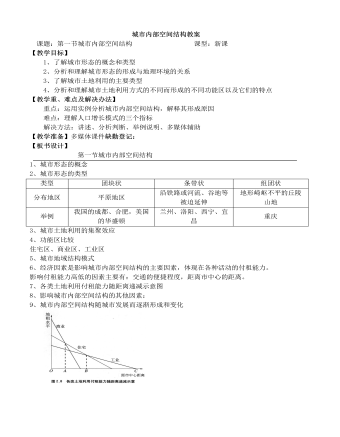
过渡:在实际生活中,城市内部空间结构并非完全按照这一经济规律呈现,而是更具复杂性。这说明除了经济因素外,还有很多其他因素在起作用,请大家结合你的认识、图2.9和案例1:纽约市的少数民族区谈谈你的看法。(2)其他因素I收入——形成不同级别住宅区的常见原因。有能力支付昂贵租金和选择最佳居住环境的人,其居住地往往形成高级住宅区。II知名度——城市内某些地区在历史、文化或经济方面具有很高的声誉,这往往会吸引更多新的住宅或商场建在该处,以提高其知名度。III种族聚居区的形成——在有些城市的某一区域内,如果某个种族或宗教团体占优势,就可能形成种族聚居区。如纽约市的唐人街、哈林区、小意大利区等。IV历史因素——城市的建筑物和街道设计可以维持久远,早期的土地利用方式对日后的功能分区有着深远的影响。
人教版高中地理必修3第二章第二节河流的综合开发教案
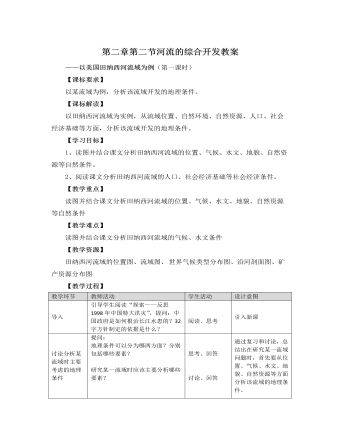
【课标要求】以某流域为例,分析该流域开发的地理条件。【课标解读】以田纳西河流域为实例,从流域位置、自然环境、自然资源、人口、社会经济基础等方面,分析该流域开发的地理条件。【学习目标】1、读图并结合课文分析田纳西河流域的位置、气候、水文、地貌、自然资源等自然条件。2、阅读课文分析田纳西河流域的人口、社会经济基础等社会经济条件。【教学重点】读图并结合课文分析田纳西河流域的位置、气候、水文、地貌、自然资源等自然条件【教学难点】读图并结合课文分析田纳西河流域的气候、水文条件【教学资源】田纳西河流域的位置图、流域图、 世界气候类型分布图、沿河剖面图、矿产资源分布图
人教版高中地理必修3第五章第一节资源的跨区域调配教案
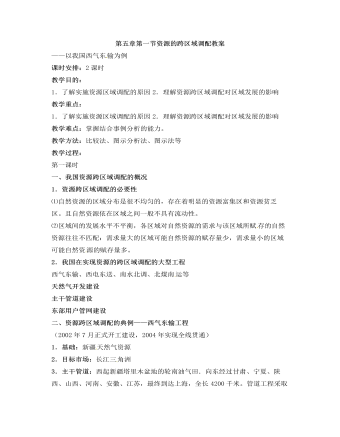
2.通过西气东输输送到上海的天然气,价格只相当于进口天然气的3/4、同等热值煤气的 2/3。你认为是否应该提高天然气的价格,以促进西部的发展。点拨:可以从不同方面分析。⑷对环境的影响①有利于改善东部地区的大气质量据监测显示,在同等热值的情况下,与煤炭相比,利用天然气作燃料几乎不产生二氧化硫、粉尘等污染物质,氮氧化物和二氧化碳的排放量也大为减少。长江三角洲地区的能源长期高度依赖煤炭,例如,上海市煤炭消费量占能源消费总量的70%。从西部地区输送来的天然气,可以部分替代煤炭。②为了最大限度减少对沿线地区生态环境的影响,西气东输工程在建设过程中,严格环境保护的要求。③在沿线农村地区推广使用天然气,可减少农民对薪柴的需求,从而缓解因植被破坏而带来的环境压力。
人教版高中历史必修3“百家争鸣”和儒家思想的形成教案
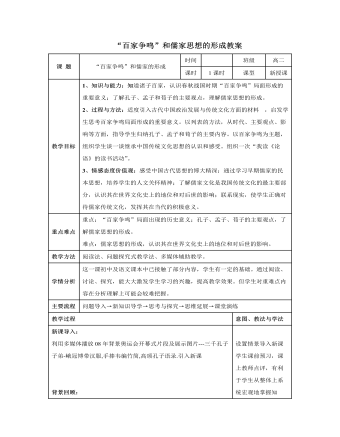
1、知识与能力:知道诸子百家,认识春秋战国时期“百家争鸣”局面形成的重要意义;了解孔子、孟子和荀子的主要观点,理解儒家思想的形成。2、过程与方法:适度引入古代中国政治发展与传统文化方面的材料 ,启发学生思考百家争鸣局面形成的重要意义。以列表的方法,从时代、主要观点、影响等方面,指导学生归纳孔子、孟子和荀子的主要内容。以百家争鸣为主题,组织学生谈一谈继承中国传统文化思想的认识和感受。组织一次“我读《论语》的读书活动”。3、情感态度价值观:感受中国古代思想的博大精深:通过学习早期儒家的民本思想,培养学生的人文关怀精神;了解儒家文化是我国传统文化的最主要部分,认识其在世界文化史上的地位和对后世的影响;联系现实,使学生正确对待儒家传统文化,发挥其在当代的积极意义。
人教版高中历史必修3充满魅力的书画和戏曲艺术教案
乾隆五十五年(公元1790年),在安徽一带很有名气的“三庆”徽戏班,来到北京演出。徽戏在北京经常和其他剧种同台演出,注意吸收和借鉴他们的长处。尤其是与以唱二黄调和西皮调为主的汉戏的合演,逐渐形成了二黄与西皮的合流,形成了“徽汉合流”的局面,后来徽剧又吸收其他民间曲调的唱腔、剧目和表演方式,逐渐形成以“皮黄”为主要声腔的京剧。到1840年左右,京剧的唱腔、念白、剧本和表演已经成熟,尤其是出现了以演“京戏”为主的一批演员,他们不再以徽戏、汉戏为名,而以演“京戏”自居。从此,诞生了一个独立的剧种──京剧。2、京剧的发展早期的京剧以迷人的唱腔、丰富的剧目、精彩的表演和京腔京味吸引了观众,使京城出现了京剧热。同治、光绪年间,京剧已经被京城市民承认,成为人们最喜爱的舞台艺术。并涌现出著名的“同光十三绝”。
人教版高中历史必修3明清之际活跃的儒家思想教案
②顾炎武也激烈反对君主专制, 主张限制君权,提出亡国与亡天下的区别,认为,保卫一家一姓的国家,是君主及其大臣的事,而保卫天下是所有人的事,这段话后来被后人提炼为“天下兴亡,匹 夫有责”,鼓励人民关心国家大事。③王夫之认为天下的土地不能被君主一人所有,而应当是从事农业的老百姓都有份。2.经济上,重视手工业、商业的发展,强调经世致用。①黄宗羲驳斥轻视工商业的传统思想,指出工商业和农业一样,都是“民生之本”,应该受到保护。②顾炎武、王夫之主张文人多研究一些有关国计民生的现实问题,反对空谈。3.思想上,批判继承传统儒学,构筑具有时代特色的新思想体系。①黄宗羲批判旧儒学的“君为臣纲”的思想,继承先秦儒家的民本思想,提出 “天下为主,君为客”的新思想命题。
人教版高中历史必修3三民主义的形成和发展教案
局限性:新三民主义在理论上、纲领上仍然没有超出资产阶级民主主义的范畴。且与中共民主革命纲领有着原则的区别。与中共革命纲领相比,新三民主义缺少的内容:八小时工作制、彻底实现人民的权利、社会主义。教学小结:(以问题代小结)(1)本课内容涉及孙中山先生一生两次重要的转变。你知道是哪两次吗?在学生讨论的基础上,教师总结:孙中山先生一生有两次重要的转变,第一次是放弃改良而走向革命道路;第二次是在他领导的一系列资产阶级革命活动失败后,接受苏俄和中共的帮助,把旧三民主义发展成为新三民主义,实行“联俄、联共、扶助农工”三大政策,实现了他一生中最伟大的转变。(2)孙中山先生的这两次转变说明了什么?这一问题可以让学生各抒己见,但教师总结时一定要紧扣孙中山先生与时俱进,为民族革命贡献毕生精力的高贵品质。
人教版高中地理必修3地理环境对区域发展的影响教案
(1)下面列出的是我国南北方传统民居的差异,分析形成这些差异的自然原因:——北方民居正南正北的方位观比南方强;——北方民居的墙体严实厚重,南方民居的墙体轻薄;——从北到南,民居的屋顶坡度逐渐增大,房檐逐渐加宽,房屋进深和高度逐渐加大。(2)下面列出的是我国南北方城市住宅搂的差异,分析导致这些差异的自然原因:——如果不考虑地价、建筑材料等因素,建同等面积的住房,北方的建筑成本比南方高 ;——建同样高度的多幢楼房,北方楼房的南北间距比南方大。点拨:本活动要求学生了解由于地理环境的差异造成南北方建筑物特点的不同,并由此认识地理环境 差异对人们生活的影响。(1)比较而言,北方的冬季寒冷而漫长,南方的夏季湿热而漫长。为了在冬季充分利用太阳光照和热量,北方民居正南正北的方位观比南方强。北方民居的墙体严实厚重,利用在冬季保温御寒;南方民居的墙体轻薄,利于在夏季通风透气。从北到南,年降水量逐渐增大,民居的屋顶坡度也逐渐增大(利于排水) ;随着对保温要求的降低和对通风纳凉要求的提高,民居的屋檐逐渐加宽,房屋进深和高度逐渐加大。